
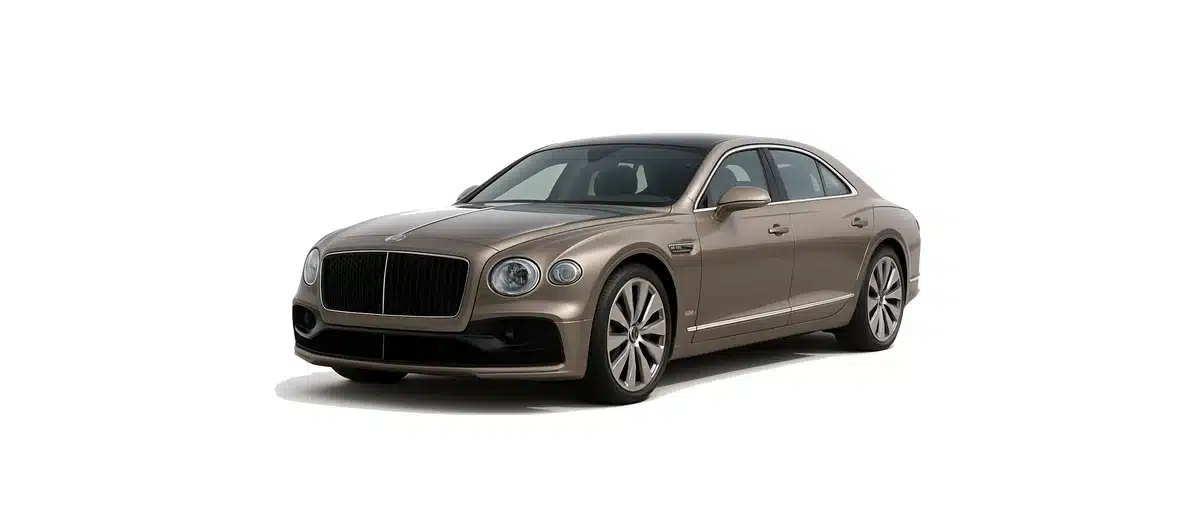
The Bentley Flying Spur is a luxury plug-in hybrid saloon, not a fully electric car. That distinction matters for charging: the Flying Spur PHEV is at its best when it is plugged in regularly at home, at work or at a destination charger, allowing short journeys to be completed using electric power while the petrol engine remains available for longer trips.
There is one particularly important point for UK owners and used-car buyers: not every Flying Spur Hybrid has the same battery, charging speed or electric range. Current UK fourth-generation / 25MY+ Flying Spur models use Bentley’s V8 plug-in hybrid powertrains, while earlier UK and European Flying Spur Hybrid models from roughly 2022 to 2024 used a 2.9-litre V6 PHEV system. The current V8 PHEV models quote a larger 25.9 kWh battery and higher peak AC charging capability than the earlier V6 car, so this guide separates the advice where it matters.
View Bentley Flying Spur Charging Cables
Bentley Flying Spur Battery and Charging Specifications
The current UK Bentley Flying Spur range is a plug-in hybrid four-door luxury saloon / grand tourer. Bentley’s current technical and media information for the 25MY+ Flying Spur V8 PHEV range refers to a 25.9 kWh battery, up to 47 miles of WLTP electric range in technical material, and up to 11 kW peak AC charging power on relevant current models. Bentley UK model pages also use wording of up to 50 miles / 80 km of electric-only driving, depending on model and specification context.
Earlier Flying Spur Hybrid V6 models are materially different. Bentley’s UK/EU information for the earlier model referred to an 18.0 kWh usable lithium-ion battery and 26 miles of WLTP electric range, with a 100% charge time stated as little as 2.5 hours in region-specific material. For that reason, owners should avoid assuming that a cable or charging expectation for a 2022–2024 V6 Flying Spur Hybrid is identical to that for a current 25MY+ V8 PHEV.
| Model context | Battery information | WLTP electric range | AC charging information |
|---|---|---|---|
| Current 25MY+ Flying Spur V8 PHEV range | 25.9 kWh battery; Bentley technical data refers to a 10–95% usable operating window | Up to 47 miles in technical material | Up to 11 kW AC; full recharge quoted as around 2 hours 45 minutes on current Speed data |
| Earlier 2022–2024 Flying Spur Hybrid V6 PHEV | 18.0 kWh usable battery quoted by Bentley | Up to 26 miles WLTP | Charge time quoted as little as 2.5 hours in Bentley UK/EU material; commonly treated as a lower AC charging profile than the latest V8 PHEV |
Battery Options
For the current UK Flying Spur, Bentley lists a 25.9 kWh battery for the V8 plug-in hybrid range. This should not be interpreted like the large usable battery in a full battery-electric vehicle; it is a PHEV battery designed to provide a meaningful electric driving range while retaining a high-performance petrol engine for longer journeys.
The earlier V6 Flying Spur Hybrid used a different battery specification. Bentley’s earlier UK/EU type-approval information referred to an 18.0 kWh usable battery. If you are buying a used Flying Spur Hybrid, check the model year, engine type and handbook before using current-generation charging or range figures. A current 25MY+ Flying Spur and an earlier V6 Hybrid may look closely related from an ownership perspective, but their charging expectations are not the same.
AC Charging Speed
AC charging is the main charging method for the Bentley Flying Spur plug-in hybrid. For current 25MY+ V8 PHEV models, Bentley media information states up to 11 kW peak charging power and a full recharge in as little as about 2 hours 45 minutes. To make full use of that quoted peak AC charging power, the owner would typically need access to a suitable three-phase AC supply and a compatible charging arrangement.
Many UK homes have a single-phase electrical supply, where a typical dedicated home wallbox provides up to around 7 kW. A current Flying Spur V8 PHEV can still be charged safely from a suitable 7 kW wallbox, but it may not reach the maximum 11 kW figure quoted for the latest car. For many owners, overnight or workplace charging at 7 kW will still be more than adequate because the battery is much smaller than that of a full EV.
For earlier V6 Flying Spur Hybrid models, a 7 kW Type 2 charging cable or wallbox is likely to be sufficient in typical UK use, because the older car’s published charging time and commonly listed retailer data point to a lower AC charging rate than the latest 25MY+ V8 PHEV. As always, the exact vehicle handbook and inlet should take priority.
UK charging-cable fitment information commonly reports Type 2 AC compatibility for the Flying Spur Hybrid. However, Bentley’s public UK model pages do not clearly publish the socket standard in the same way some EV manufacturers do, so owners should verify the vehicle inlet or handbook before buying a cable, especially for a used or imported car.
DC Rapid Charging Speed
Do not plan Flying Spur Hybrid ownership around DC rapid charging unless your exact vehicle handbook confirms that it is supported. Bentley’s public current specifications focus on AC charging time and peak AC charging power rather than publishing a clear UK DC rapid-charging specification or a 10–80% rapid-charge time for the Flying Spur PHEV.
This is normal for many plug-in hybrids. Because the Flying Spur has a petrol engine as well as an electric motor and battery, its charging pattern is different from a battery-electric car. The most useful approach is usually to charge from AC at home, at work, at hotels or at longer-stay public destinations, rather than relying on motorway rapid chargers.
Range and Efficiency
The current 25MY+ Bentley Flying Spur V8 PHEV range quotes up to 47 miles of WLTP electric range in Bentley technical material, with Bentley UK pages also using up to 50 miles / 80 km electric-only wording in current model information. In everyday UK driving, actual electric range will vary with temperature, route, speed, traffic, wheel and tyre specification, cabin heating or cooling use, and driving style.
The earlier V6 Flying Spur Hybrid quoted up to 26 miles WLTP, so it should not be judged against the newer V8 PHEV range figure. For a used V6 owner, a shorter electric range is expected and does not necessarily indicate a fault. As with any plug-in hybrid, the best efficiency comes from starting local journeys with a charged battery and using petrol power for the journeys that exceed the electric range.
Charging at Home
Home charging is the most convenient way to run a Bentley Flying Spur PHEV. A dedicated wallbox is usually the preferred option because it is designed for repeated EV charging, can be installed with appropriate protection by a qualified professional, and is much more convenient than relying on occasional public charging.
For a current 25MY+ Flying Spur V8 PHEV, an 11 kW three-phase AC installation can make best use of the car’s quoted peak AC charging capability where such a supply is available. Many UK properties, however, will use a 7 kW single-phase wallbox. That may take longer than the fastest quoted time, but it will still suit many owners because the car can be replenished during an evening, overnight, or during a normal working day.
For an earlier V6 Flying Spur Hybrid, a 7 kW home wallbox is likely to be well matched to the vehicle’s charging profile. If you have a tethered wallbox, confirm the connector is appropriate for the car. If you have an untethered wallbox, you will need a compatible charging cable, with the vehicle handbook and inlet used as the final check.
A 3-pin EV charger is generally best suited as a backup or occasional charging solution, but can be used regularly if a qualified electrician has confirmed the socket and electrical installation are suitable for sustained EV charging. For a premium PHEV like the Flying Spur, a dedicated wallbox is usually the more practical everyday solution.
Public Charging
Public charging for the Flying Spur is most useful at AC destination chargers: hotels, offices, golf clubs, town-centre car parks, restaurants and other places where the car will be parked for a few hours. This suits the PHEV format well. You arrive, plug in, and return to a battery that is partially or fully replenished for the next local journey.
When using untethered public AC charge points, you will normally need to bring your own cable. Before relying on a specific cable, check the car’s inlet and handbook. Where Type 2 AC compatibility is confirmed for your car, a Type 2 cable suitable for the charge point and vehicle is the usual public AC charging solution in the UK and Europe.
Because the Flying Spur is not a full EV, there is less need to build long journeys around charging stops. If the battery is depleted, the petrol engine allows the journey to continue. The main benefit of public charging is therefore to increase the amount of electric running during the day, rather than to make the car viable for long-distance travel.
Vehicle-Specific Features
Current 25MY+ Flying Spur models support connected services through My Bentley where available, including remote charging status and control functions. Bentley support material also refers to hybrid cabin comfort functions, allowing owners to manage cabin comfort before departure when supported and configured.
These features are useful for a plug-in hybrid because they make it easier to treat charging as a routine. If you can check charge status remotely, set charging behaviour where supported, and prepare the cabin before leaving, the Flying Spur becomes easier to use in electric mode for short urban and suburban journeys.
Charging Tips
- Identify your model first: current 25MY+ V8 PHEV and earlier V6 Hybrid versions have different battery and range figures.
- Plug in frequently: a PHEV delivers its best efficiency when it starts regular local journeys with charge in the battery.
- Use AC charging as the default: home, workplace and destination charging are better matched to the Flying Spur than rapid-charging stops.
- Consider your electricity supply: 11 kW AC charging generally requires a suitable three-phase arrangement; many UK homes will charge at around 7 kW.
- Check the socket before buying: Type 2 AC is commonly reported for UK cable fitment, but the handbook or vehicle inlet should be verified.
- Do not compare old and new figures directly: the earlier V6 car’s 26-mile WLTP figure is not the same as the current V8 PHEV’s quoted electric range.
Frequently Asked Questions
Is the Bentley Flying Spur fully electric?
No. The current UK Flying Spur is a plug-in hybrid, not a battery-electric vehicle. It can drive on electric power for shorter journeys, but it also has a petrol engine.
How long does the Bentley Flying Spur take to charge?
For current 25MY+ V8 PHEV models, Bentley quotes a full recharge in as little as about 2 hours 45 minutes with up to 11 kW peak AC charging. Earlier V6 Flying Spur Hybrid models used a different battery and charging profile, with Bentley previously quoting as little as 2.5 hours in region-specific material.
Can I charge a Flying Spur from a normal 3-pin socket?
A 3-pin EV charger is generally best suited as a backup or occasional charging solution, but can be used regularly if a qualified electrician has confirmed the socket and electrical installation are suitable for sustained EV charging. A dedicated wallbox is usually more convenient for routine use.
Does the Flying Spur support rapid charging?
Bentley’s public UK information does not provide a clear DC rapid-charging specification or 10–80% rapid-charge time for the Flying Spur PHEV. Owners should not rely on DC rapid charging unless the exact vehicle handbook confirms it.
What cable do I need for a Bentley Flying Spur Hybrid?
UK cable fitment sources commonly report Type 2 AC for the Flying Spur Hybrid, but because Bentley’s public pages do not clearly publish the socket standard, you should confirm against the vehicle inlet or handbook before buying, particularly for used or imported vehicles.
What This Means for Drivers
The Bentley Flying Spur PHEV is best understood as a luxury saloon that rewards regular, convenient AC charging. If you drive mostly short journeys and charge at home or work, the current V8 PHEV’s electric range can cover many everyday trips without using much petrol. If you own the earlier V6 Hybrid, expectations should be based on its smaller battery and shorter WLTP range, not the newer model’s figures.
For most UK owners, the practical setup is straightforward: a professionally installed home wallbox, a compatible public AC cable where required, and a habit of plugging in whenever the car is parked for a useful period. The key is to choose charging equipment based on the exact Flying Spur Hybrid you own.
Looking for a Charging Cable for Bentley Flying Spur?
We sell charging cables for the Bentley Flying Spur Hybrid, but owners should still confirm the vehicle inlet and model year before ordering because current V8 PHEV and earlier V6 Hybrid versions have different charging expectations.
View Bentley Flying Spur Charging Cables
Please note that this information is intended as a guide. Charging specifications may change due to model and year of manufacture. For precise information, always refer to your vehicle user manual.

