
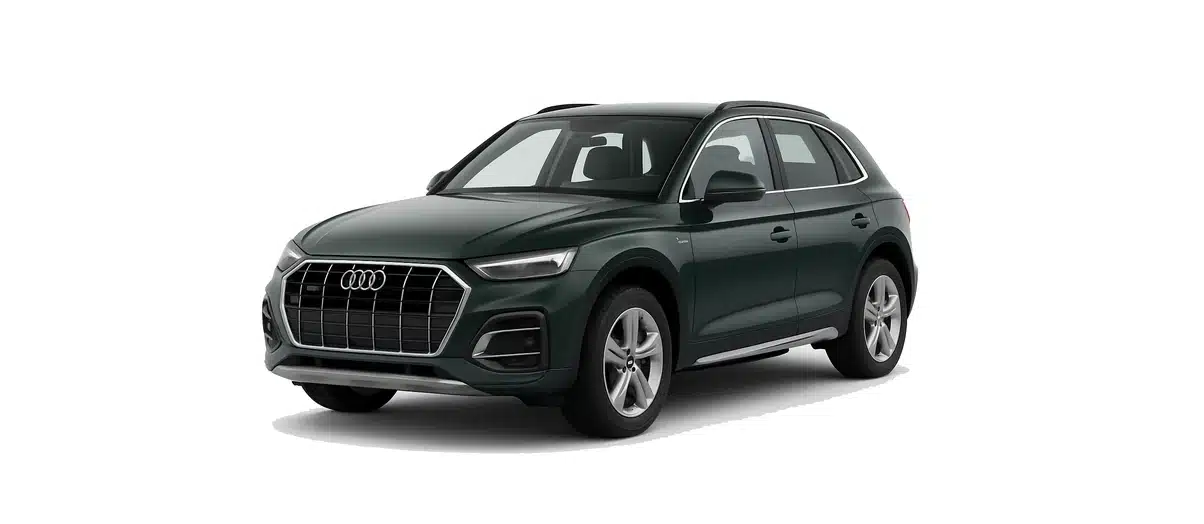
The Audi Q5 TFSIe is a plug-in hybrid SUV, not a fully electric car. That distinction matters because its charging needs are different from a battery-electric Audi. For most UK owners, the priority is reliable Type 2 AC charging at home, at work or on public AC posts, rather than planning around rapid charging stops.
There is one important complication: the Q5 plug-in hybrid has changed significantly over time. Earlier UK Q5 TFSI e models used a smaller battery and a 7.4 kW AC charging limit, while the current UK Q5 plug-in hybrid is marketed as the Q5 SUV e-hybrid and uses a larger battery with up to 11 kW AC charging where the right supply is available. This guide explains how to think about those differences and how to choose a suitable charging cable.
View Audi Q5 TFSIe Charging Cables
Audi Q5 TFSIe Battery and Charging Specifications
The safe starting point for UK Q5 plug-in hybrid charging is that these models use a Type 2 AC charging connection. They are designed to be charged from an AC wallbox, public AC charge point or suitable portable charger, with charging speed limited by the car’s onboard AC charger rather than by the headline rating of the charge point.
Because Audi’s naming and specification have changed, it is best to identify which Q5 plug-in hybrid you have before buying a replacement cable or estimating charge times. The earlier Q5 TFSI e generation and the newer Q5 SUV e-hybrid should not be treated as one universal specification.
| Model group | Battery information | AC charging | Official electric range |
|---|---|---|---|
| Earlier Q5 TFSI e / Q5 Sportback TFSI e, post battery update | 17.9 kWh gross, 14.4 kWh usable | Up to 7.4 kW AC | Up to around 39 miles WLTP, depending on version |
| Earlier pre-update Q5 TFSI e | 14.1 kWh gross; usable figure not confirmed in the reviewed UK sources | Typically treated as Type 2 AC charging; check the handbook or VIN data | Varies by model year and specification |
| Current UK Q5 SUV e-hybrid | 25.9 kWh gross, 20.7 kWh net | Up to 11 kW AC where supported | 55–61 miles WLTP in Audi UK data |
Battery Options
Earlier UK-market Q5 TFSI e models were offered as plug-in hybrid versions of the previous Q5 generation. Audi information for the updated earlier generation lists a 17.9 kWh gross battery with 14.4 kWh usable capacity. Audi UK’s April 2023 data for the Q5 50 TFSI e quattro also lists a 14.4 kWh usable battery and up to 39 miles of WLTP electric range.
Before that battery update, Audi material refers to a 14.1 kWh gross battery. The exact usable capacity for that early pack was not confirmed in the reviewed UK sources, so owners of early cars should check the vehicle handbook, charging flap information or VIN-specific Audi data if precise figures are needed.
The current UK Q5 plug-in hybrid is now marketed as the Q5 SUV e-hybrid rather than simply Q5 TFSI e. Audi UK lists a 25.9 kWh battery, with Audi technical material confirming 25.9 kWh gross and 20.7 kWh net capacity. This larger pack gives the current model a higher official electric range than the earlier Q5 TFSI e.
AC Charging Speed
AC charging is the main charging method for the Audi Q5 TFSIe family. For earlier Q5 TFSI e models, Audi UK data and the Audi/Pod Point charging leaflet list a maximum AC charging rate of 7.4 kW. On a typical 7 kW UK home wallbox, Audi’s earlier information gives an approximate 0–100% charging time of around 2 hours 30 minutes for the 14.4 kWh usable battery version.
For the current UK Q5 SUV e-hybrid, Audi UK lists a maximum AC charging rate of 11 kW. However, 11 kW AC normally requires a suitable three-phase AC supply. Most UK homes have single-phase electricity, so a current Q5 e-hybrid will commonly charge at around 7 kW on a standard home wallbox. Audi UK lists a 0–100% time of about 3 hours 45 minutes on a 7 kW wallbox, while European press information quotes around 2.5 hours at the maximum 11 kW three-phase AC rate.
This means a 22 kW public AC post will not automatically charge the car at 22 kW. The limiting factor is the onboard charger: up to 7.4 kW on many earlier Q5 TFSI e models, and up to 11 kW on the current e-hybrid where a suitable three-phase AC supply is available.
DC Rapid Charging Speed
DC rapid charging is not the main focus for the UK Audi Q5 TFSIe. The reviewed Audi/Pod Point leaflet for the earlier Q5 TFSI e marks rapid charging as not available, and the reviewed UK information for the current Q5 e-hybrid confirms AC charging figures rather than providing a DC rapid charging specification.
For that reason, owners should not plan journeys around DC rapid charging for the Q5 TFSI e or Q5 e-hybrid unless the exact vehicle’s handbook, charging inlet and VIN-specific Audi data confirm that DC charging is fitted. In normal use, the petrol engine and hybrid system take over when the battery is depleted, so the car is not used in the same way as a pure EV that depends on rapid chargers for long-distance travel.
Range and Efficiency
The electric range of the Audi Q5 plug-in hybrid depends heavily on model year, battery size, temperature, driving style, speed, terrain and use of heating or air conditioning. Earlier updated Q5 TFSI e models are listed by Audi UK with up to 39 miles of WLTP electric range, while the current Q5 SUV e-hybrid is listed at 55–61 miles WLTP depending on specification.
WLTP figures are useful for comparing vehicles, but day-to-day range can vary. Short urban journeys are usually where a plug-in hybrid SUV can make the best use of its electric driving capability. Higher-speed motorway driving, cold weather and a heavily loaded vehicle can reduce the distance covered before the petrol engine contributes more of the work.
For many Q5 TFSI e owners, the key efficiency habit is simple: charge regularly. A plug-in hybrid delivers its best fuel-saving benefit when the battery is topped up often enough for local journeys to be completed mostly on electric power.
Charging at Home
Home charging is the most convenient way to run an Audi Q5 TFSIe or Q5 e-hybrid. Plugging in overnight means the car can start the next day with a full or near-full battery, making it easier to use electric driving for commuting, school runs and short local trips.
For an earlier Q5 TFSI e, a Type 2 cable rated for 32 A single-phase charging is normally appropriate for using the car’s 7.4 kW AC capability on a compatible wallbox. For the current Q5 SUV e-hybrid, a Type 2 cable is still the correct connection. If you have access to three-phase AC charging, the vehicle may be able to use up to 11 kW, but many UK domestic installations will charge at around 7 kW.
A 3-pin charger is generally best suited as a backup or occasional charging solution, but can be used regularly if a qualified electrician has confirmed the socket and electrical installation are suitable for sustained EV charging. Avoid relying on old, damaged or shared extension leads, and always follow the vehicle handbook and charger manufacturer’s safety guidance.
Public Charging
Public charging for the Q5 TFSIe family is mainly about AC destination charging. This includes supermarket chargers, workplace charge points, hotel chargers, town-centre posts and car-park AC units. These are well matched to a plug-in hybrid because the car can regain useful electric range while parked for a few hours.
If you connect an earlier Q5 TFSI e to a 22 kW AC post, the car will still be limited to its onboard AC charger, typically 7.4 kW on the UK models covered here. If you connect the current Q5 SUV e-hybrid to a suitable three-phase AC post, it may be able to use up to 11 kW. Where the post or cable arrangement only supports single-phase charging, expect charging closer to typical 7 kW wallbox speeds.
Many public AC points are untethered, meaning you need to bring your own Type 2 charging cable. This is why keeping a suitable cable in the boot is useful, especially for a PHEV that benefits from opportunistic charging whenever the car is parked.
Vehicle-Specific Features
The most important vehicle-specific point is that the Audi Q5 TFSIe is a plug-in hybrid. It combines a petrol TFSI engine with an electric motor and an externally chargeable battery. It should not be confused with the China-market Audi Q5 e-tron, which is a different fully electric vehicle.
Earlier Q5 TFSI e material places the charging connector on the left side rear of the vehicle. Owners should still check their own charging flap and handbook, especially if the car is an imported vehicle or a different model-year specification.
For the current Q5 e-hybrid family, Audi has described improved recuperation performance and driver-adjustable recuperation in EV mode using steering-wheel paddles. Regenerative braking can help recover energy during slowing and descending, although it does not replace the need to plug in if you want to maximise electric running.
Charging Tips
- Check which Q5 plug-in hybrid you own. Earlier Q5 TFSI e models and the current Q5 e-hybrid have different battery capacities and AC charging limits.
- Use a Type 2 cable. UK and European Q5 plug-in hybrid charging is based on a Type 2 AC connection.
- Do not assume 22 kW charging. A 22 kW public post does not override the car’s onboard charger limit.
- Charge little and often. Plug-in hybrids are most efficient when the battery is regularly topped up for short journeys.
- Keep a cable in the vehicle. Many destination chargers are untethered, so carrying your own cable gives you more options.
- Check the handbook before relying on rapid charging. UK-focused information reviewed for the Q5 TFSI e/e-hybrid does not provide a confirmed DC rapid charging use case.
Frequently Asked Questions
What charging cable does the Audi Q5 TFSIe use?
The UK Audi Q5 TFSIe and current Q5 e-hybrid use a Type 2 AC charging connection. For many earlier models, a 32 A single-phase Type 2 cable is a sensible match for the 7.4 kW AC onboard charger. Current Q5 e-hybrid owners with access to three-phase AC may want a cable suitable for 11 kW charging.
Is the Audi Q5 TFSIe a fully electric car?
No. It is a plug-in hybrid, meaning it has both a petrol engine and an electric motor. It can be charged externally and driven on electric power for shorter journeys, but it is not a battery-electric vehicle.
Can the Audi Q5 TFSIe use rapid chargers?
For earlier UK Q5 TFSI e models, reviewed Audi/Pod Point material states that rapid charging is not available. For the current Q5 e-hybrid, the reviewed UK information confirms AC charging figures rather than a DC rapid charging specification. Check your exact vehicle handbook or VIN data before assuming DC charging is possible.
How long does the Audi Q5 TFSIe take to charge at home?
Earlier 14.4 kWh usable Q5 TFSI e models are listed at around 2 hours 30 minutes from 0–100% on a 7 kW wallbox. The current Q5 SUV e-hybrid is listed by Audi UK at around 3 hours 45 minutes from 0–100% on a 7 kW wallbox. Actual charging time can vary depending on the charger, temperature, battery state and installation.
Will a 22 kW public charger make my Q5 charge faster?
Not beyond the car’s onboard AC limit. Earlier Q5 TFSI e models are typically limited to 7.4 kW AC, while the current Q5 e-hybrid is listed at up to 11 kW AC where suitable three-phase charging is available.
What This Means for Drivers
For most UK drivers, the Audi Q5 TFSIe is easiest to live with when treated as a home-charged plug-in hybrid. Install or use a suitable AC wallbox where possible, carry a Type 2 cable for public destination charging, and do not base your charging plan on rapid charging unless your exact vehicle confirms it.
The main buying point for a cable is identifying your model-year group. Earlier Q5 TFSI e owners should focus on Type 2 AC charging up to 7.4 kW. Current Q5 SUV e-hybrid owners still need Type 2 AC charging, but the car can support up to 11 kW AC where the supply and cable are suitable. If in doubt, check the charging flap, handbook or VIN-specific Audi information before ordering.
Looking for a Charging Cable for Audi Q5 TFSIe?
We offer charging cables for the Audi Q5 TFSIe, including Type 2 options for home and public AC charging. Choose a cable that matches your vehicle year, charging setup and expected use.
View Audi Q5 TFSIe Charging Cables
Please note that this information is intended as a guide. Charging specifications may change due to model and year of manufacture. For precise information, always refer to your vehicle user manual.

