
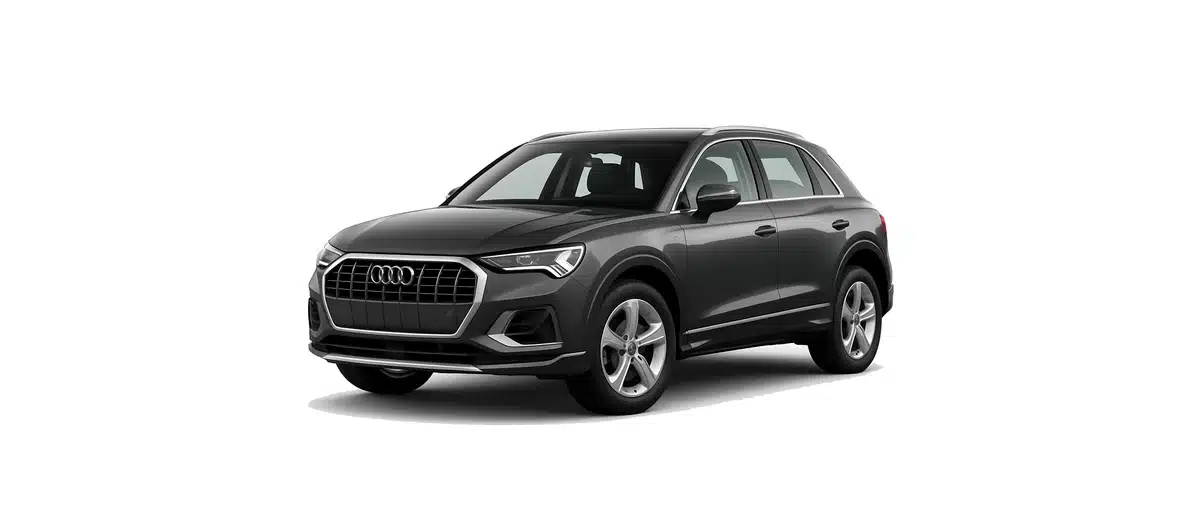
The Audi Q3 TFSIe is a plug-in hybrid compact SUV, not a fully electric Audi e-tron model. That distinction matters because the Q3 plug-in hybrid has both a petrol engine and an electric drive system, and its charging requirements are different from a battery-electric vehicle. It is also important because there is a major generational split in the UK Q3 plug-in hybrid range.
Many UK owners searching for Audi Q3 TFSIe charging advice will have the previous-generation Q3 45 TFSI e or Q3 Sportback 45 TFSI e. This older model uses a relatively small plug-in hybrid battery and AC charging only. Audi UK now sells the replacement as the New Q3 SUV e-hybrid, which has a larger battery, faster AC charging capability and DC rapid charging support. Before choosing a cable or planning charging times, the first step is to confirm which version you own.
View Audi Q3 TFSIe Charging Cables
Audi Q3 TFSIe Battery and Charging Specifications
The key point with the Audi Q3 plug-in hybrid is that there is not one universal charging specification for every model wearing Q3 plug-in hybrid branding. The previous Q3 45 TFSI e is best treated as a Type 2 AC-only plug-in hybrid, while the current Q3 SUV e-hybrid has Type 2 AC and CCS Combo 2 DC capability.
| Model | Battery | AC charging | DC rapid charging | Official electric range |
|---|---|---|---|---|
| Previous Q3 45 TFSI e / Q3 Sportback 45 TFSI e | 13.0 kWh gross / 10.4 kWh usable | Up to 3.6 kW AC | Not confirmed for this generation; treat as AC only | Up to 35 miles |
| Current New Q3 SUV e-hybrid | 25.7 kWh gross / 19.7 kWh net | Up to 11 kW AC | Up to 50 kW DC | Up to 73 miles |
These figures show why model identification is so important. A charging cable or public charging plan that makes sense for the newer Q3 SUV e-hybrid may not apply to the older Q3 45 TFSI e.
Battery Options
The previous-generation Audi Q3 45 TFSI e used a 1.4-litre TFSI petrol engine combined with an electric motor. Audi UK legacy information lists a 10.4 kWh usable battery capacity and up to 35 miles of official electric range. Audi technical material also refers to a 13.0 kWh battery capacity for this older generation.
The current UK replacement, the New Q3 SUV e-hybrid, uses a different plug-in hybrid setup with a 1.5-litre TFSI petrol engine and electric motor. Audi UK lists a 19.7 kWh net battery capacity, while Audi technical information gives a 25.7 kWh gross figure. This larger battery is the reason the newer model has a much higher official electric range claim of up to 73 miles.
For owners, the practical difference is straightforward: the older car is designed mainly around regular home or workplace top-ups, while the newer Q3 SUV e-hybrid is more capable of covering longer local journeys on electric power and can also make use of suitable DC rapid chargers.
AC Charging Speed
AC charging is the main day-to-day charging method for both versions of the Audi Q3 plug-in hybrid. In the UK, that usually means using a home wallbox, a workplace charger, or a public AC post with a Type 2 charging cable.
For the previous Q3 45 TFSI e, the maximum AC charging rate is 3.6 kW. Audi UK quoted around 3 hours 45 minutes for a 0-100% charge using a 7 kW wallbox, because the car itself limits the charging rate. In other words, plugging an older Q3 TFSI e into a 7 kW home charger does not make it charge at 7 kW; it will charge at up to the vehicle’s onboard AC limit.
The current Q3 SUV e-hybrid is rated at up to 11 kW AC. That higher figure will normally require a suitable three-phase AC supply or a compatible public AC post. Most UK homes have single-phase electricity, and most domestic wallboxes are rated at up to 7 kW, so many UK owners should expect home charging to be limited by the charger and domestic supply rather than the vehicle. Audi UK quotes about 3 hours for 0-100% using a 7 kW wallbox for the current model.
DC Rapid Charging Speed
This is one of the biggest differences between the two Q3 plug-in hybrid generations. The previous Q3 45 TFSI e should be treated as a Type 2 AC-only plug-in hybrid. Reliable manufacturer information confirms AC charging for that generation, but does not support advising owners to use CCS rapid charging. If you own the older Q3 TFSI e, do not buy a cable or adaptor expecting to use DC rapid charging.
The current New Q3 SUV e-hybrid is different. Audi UK lists up to 50 kW DC charging, with 10-80% charging shown at 26 minutes in the battery table and described more broadly as around or as little as 30 minutes on public-facing material. This gives the newer Q3 e-hybrid more flexibility on longer days out, especially where a short top-up can restore a useful amount of electric driving range.
As with any rapid charging figure, real charging time can vary depending on battery state of charge, charger availability, ambient temperature, battery temperature and site conditions.
Range and Efficiency
The older Audi Q3 TFSI e has an official electric range of up to 35 miles according to Audi UK legacy data. The current Q3 SUV e-hybrid is listed at up to 73 miles. These are WLTP figures, which are standardised test results rather than guaranteed everyday range.
In normal UK driving, electric range will vary with speed, route, weather, traffic, tyre choice, load and use of cabin heating or air conditioning. Short urban journeys often suit plug-in hybrids well because regenerative braking and lower speeds help electric efficiency. Motorway driving, cold winter mornings and heavier use of climate control can reduce the distance covered before the petrol engine becomes more involved.
The main ownership benefit comes from plugging in regularly. A Q3 TFSIe that is charged at home or work can cover many local trips using mostly electric power. If it is rarely charged, it effectively becomes a petrol hybrid carrying extra battery weight, so fuel economy and emissions benefits may be reduced.
Charging at Home
For most Audi Q3 TFSIe owners, home charging is the most convenient and cost-effective approach. A dedicated home wallbox is usually easier, safer and faster than relying on a domestic socket, and it allows you to start each day with a charged battery.
Owners of the previous Q3 45 TFSI e do not need an especially powerful wallbox to reach the car’s maximum AC charging speed, because the car is limited to up to 3.6 kW. However, a 7 kW wallbox can still make sense because it is the common UK home charging standard and may be useful for future vehicles.
Owners of the current Q3 SUV e-hybrid can benefit from a 7 kW home wallbox for regular overnight charging, even though the vehicle’s maximum AC capability is higher at 11 kW. To achieve 11 kW AC, you would typically need a suitable three-phase supply and compatible charging equipment, which is less common in UK homes.
A 3-pin plug-in charger is generally best suited as a backup or occasional charging solution, but can be used regularly if a qualified electrician has confirmed the socket and electrical installation are suitable for sustained EV charging. Avoid using damaged sockets, extension leads, multi-way adaptors or any arrangement that has not been checked for continuous high-load use.
Public Charging
Public charging advice depends heavily on which Q3 plug-in hybrid you own. For the older Q3 45 TFSI e, public AC charging is possible at Type 2 posts, but short stops may not add much range because the car charges at up to 3.6 kW. This makes destination charging more useful than brief en-route charging. For example, a few hours at a workplace, hotel, car park or leisure centre can be worthwhile, whereas a 20-minute stop at an AC post will only add a modest amount.
The current Q3 SUV e-hybrid gives drivers more options. It can still use Type 2 AC posts for destination charging, but it can also use compatible CCS DC rapid chargers. That can be useful if you want to restore electric range during a longer journey or between appointments. Even so, because the Q3 is a plug-in hybrid with a petrol engine, rapid charging is more about convenience and maximising electric driving than avoiding being stranded.
When using public AC chargers, many UK posts are untethered, meaning you need to bring your own Type 2 cable. Tethered rapid chargers usually have their own CCS cable attached, so a separate DC cable is not something drivers normally carry.
Vehicle-Specific Features
The most important vehicle-specific feature is the plug-in hybrid layout. The Audi Q3 TFSIe can drive on electric power when the battery has sufficient charge, but it also has a petrol engine and produces tailpipe emissions when that engine is running. It should not be treated like a fully electric SUV when planning charging stops or choosing equipment.
The second key feature is the generation difference. Older Q3 45 TFSI e and Q3 Sportback 45 TFSI e models use Type 2 AC charging only in practical cable-selection terms. The current Q3 SUV e-hybrid adds CCS DC capability and a larger battery. If you are unsure which version you have, check the vehicle handbook, charging inlet, registration details, or Audi documentation before buying accessories.
Charging Tips
- Identify your model first: older Q3 TFSI e models and the current Q3 SUV e-hybrid have materially different charging specifications.
- Use a Type 2 cable for AC charging: this is the key cable for untethered home wallboxes and public AC posts.
- Do not expect 7 kW from the older model: the previous Q3 TFSI e is limited to up to 3.6 kW AC.
- Plan longer AC stops for the older car: workplace, overnight and destination charging make more sense than quick AC stops.
- Use CCS only where appropriate: DC rapid charging applies to the current Q3 SUV e-hybrid, not the older Q3 45 TFSI e.
- Charge regularly: a plug-in hybrid delivers its best electric-driving benefit when the battery is topped up often.
Frequently Asked Questions
Is the Audi Q3 TFSIe a fully electric car?
No. The Audi Q3 TFSIe is a plug-in hybrid. It can drive on electric power when charged, but it also has a petrol engine and produces tailpipe emissions when the combustion engine is running.
What charging cable does the older Audi Q3 45 TFSI e need?
For the older Q3 45 TFSI e, a Type 2 charging cable is the appropriate choice for AC public charging and untethered home wallboxes. This generation should be treated as AC only for charging advice.
Can the older Audi Q3 TFSI e use rapid chargers?
Reliable manufacturer data confirms AC charging for the older Q3 TFSI e, but not DC rapid charging. Owners should not assume the older model can use CCS rapid chargers.
Can the current Audi Q3 SUV e-hybrid use DC rapid charging?
Yes. The current Q3 SUV e-hybrid is listed by Audi UK with up to 50 kW DC charging and a 10-80% time of 26 minutes in the battery data.
Will a 7 kW wallbox charge the older Q3 TFSI e at 7 kW?
No. The previous Q3 TFSI e is limited by its onboard AC charger to up to 3.6 kW, even when connected to a 7 kW wallbox.
What is the electric range of the Audi Q3 TFSIe?
The older Q3 TFSI e is listed at up to 35 miles of official electric range. The current Q3 SUV e-hybrid is listed at up to 73 miles. Real-world range will vary with conditions and driving style.
What This Means for Drivers
If you own the previous-generation Audi Q3 45 TFSI e, your charging life is simple: use a Type 2 AC cable, charge at home or at destination AC posts, and expect the car to charge at up to 3.6 kW. A 7 kW home wallbox is still convenient, but the vehicle will not use the full output.
If you are considering or already own the current Audi Q3 SUV e-hybrid, you have a more capable charging setup. A 7 kW home wallbox remains the everyday solution for most UK households, but the car can also take advantage of faster AC charging where a suitable supply is available and can use CCS DC rapid charging on compatible public chargers.
For both versions, regular charging is what makes the plug-in hybrid system worthwhile. The more often you start journeys with a charged battery, the more local driving you can complete using electric power.
Looking for a Charging Cable for Audi Q3 TFSIe?
If you need a suitable Type 2 cable for an Audi Q3 TFSIe, check your exact model generation first so you choose equipment that matches your vehicle’s charging capability. We sell Audi Q3 charging cables to help owners find compatible options for home and public AC charging.
View Audi Q3 TFSIe Charging Cables
Please note that this information is intended as a guide. Charging specifications may change due to model and year of manufacture. For precise information, always refer to your vehicle user manual.

