
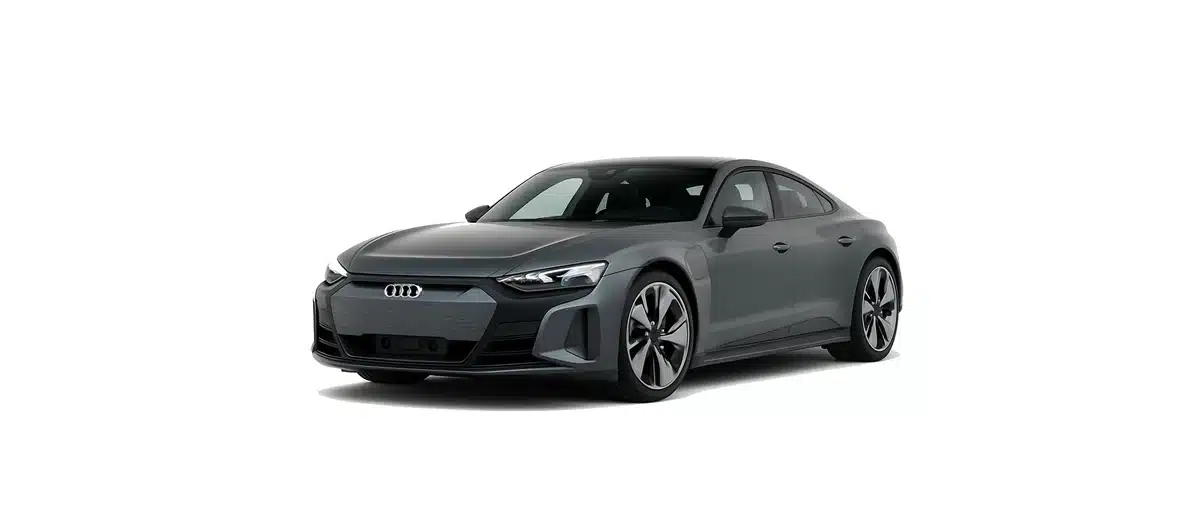
The Audi e-tron GT is a battery-electric grand tourer, not a plug-in hybrid, and UK/EU models use the familiar Type 2 connection for AC charging and CCS Combo 2 for DC rapid charging. That makes cable selection straightforward for home and public AC charging: a Type 2 to Type 2 Mode 3 cable is the key cable for most UK owners.
Where the e-tron GT needs a little more care is specification. The charging connector has stayed broadly simple, but the battery and rapid-charging capability changed significantly with the updated generation. Current UK e-tron GT quattro, S e-tron GT, RS e-tron GT and RS e-tron GT performance models use the larger 105 kWh gross battery with 97 kWh net capacity. Earlier pre-facelift cars, commonly found on the used market, used a smaller 93.4 kWh gross battery with around 83.7 kWh usable capacity and a lower DC charging peak. If you are comparing charge times or range figures, always check the exact model year and derivative.
View Audi e-tron GT Charging Cables
Audi e-tron GT Battery and Charging Specifications
For UK charging, the Audi e-tron GT uses a Type 2 socket for AC charging and a CCS Combo 2 connection for DC rapid charging. AC charging covers home wallboxes, workplace chargers, destination chargers and many public posts. DC charging is used at motorway services and ultra-rapid charging hubs, where the car connects via a tethered CCS cable supplied by the charger.
Current UK technical data supports 11 kW AC charging as the standard safe figure. On DC, the updated generation can accept up to 320 kW under suitable conditions, with Audi quoting around 18 minutes for a 10-80% rapid charge when the charger, battery temperature and state of charge are all favourable. Older 2021-2024 cars do not share the same headline DC figure, with data for pre-facelift cars sitting closer to the 268-270 kW region.
The e-tron GT sits on the Volkswagen Group J1 dedicated EV platform and uses an 800 V electrical architecture. This is one reason the current car can achieve very high rapid-charging rates when connected to a powerful enough ultra-rapid charger.
Battery Options
There are two main battery contexts UK buyers should be aware of:
- Current/new-generation e-tron GT quattro, S e-tron GT, RS e-tron GT and RS e-tron GT performance: 105 kWh gross battery capacity, with around 97 kWh net usable capacity.
- Pre-facelift e-tron GT quattro and RS e-tron GT, roughly 2021-2024 used cars: 93.4 kWh gross battery capacity, with around 83.7 kWh usable capacity.
This difference matters. The cable type remains Type 2 for AC and CCS for rapid charging, but range, rapid-charge performance and long-distance charging stops will not be identical between older and current cars. If you are buying a used Audi e-tron GT, do not rely only on the model name. Check the registration year, VIN-linked specification, battery size and the exact variant.
AC Charging Speed
The current UK Audi e-tron GT supports 11 kW AC charging. To achieve 11 kW, you need a compatible three-phase AC charge point. Many UK homes have single-phase electricity, so a typical 7.4 kW home wallbox will be the practical maximum for many owners, even though the car itself can accept more on a suitable three-phase supply.
For most UK owners, a 32A Type 2 to Type 2 cable is the right choice for untethered home wallboxes and public AC chargers. A single-phase 32A cable is suitable for 7.4 kW home charging. If you regularly use three-phase workplace or public AC charging, a three-phase Type 2 cable is worth considering so the car can make use of its 11 kW capability where the charging post supports it.
Some European information refers to optional 22 kW AC charging in certain contexts, but current UK evidence does not support describing 22 kW as standard. Unless your individual car is confirmed to have a compatible 22 kW onboard charger, you should assume 11 kW AC is the relevant figure.
DC Rapid Charging Speed
DC rapid charging is where the updated e-tron GT makes its biggest step forward. Current models can charge at up to 320 kW from a suitable ultra-rapid CCS charger, with a quoted 10-80% time of around 18 minutes in ideal conditions. This is an impressive figure, but it is not guaranteed every time you plug in. The charger must be powerful enough, the battery needs to be at the right temperature, the car must be in the correct state-of-charge window, and the charging curve will naturally taper as the battery fills.
For road trips, the most efficient strategy is usually to use the 10-80% window. Charging above 80% on a DC rapid charger slows noticeably to protect the battery, so it is often quicker overall to stop again later rather than wait for a near-full charge. If you have an older pre-facelift e-tron GT, plan with the lower DC peak in mind rather than assuming the newer 320 kW capability.
Range and Efficiency
Range varies by model year, derivative, wheels, equipment and driving conditions. Current e-tron GT quattro models have the highest quoted UK range in the line-up, with figures up to around 374-384 miles depending on source, specification and page context. The current S e-tron GT sits slightly lower, while RS models are generally quoted lower again because of their performance focus. The RS e-tron GT performance is quoted by Audi UK at roughly the high-350s to mid-360s miles WLTP depending on specification.
Real-world range will usually be lower than WLTP, especially in cold weather, at motorway speeds or with repeated hard acceleration. EV Database estimates a real-world range of around 335 miles for the current e-tron GT quattro. As with all EVs, efficiency improves with smoother driving, moderate speeds, correct tyre pressures and sensible use of cabin heating and air conditioning.
Charging at Home
Home charging is the easiest way to run an Audi e-tron GT day to day. A 7.4 kW single-phase wallbox can add a substantial amount of range overnight and is usually enough for normal commuting, school runs and local driving. Because the current e-tron GT has a large usable battery, a full low-to-high charge on a 7.4 kW wallbox will take many hours, but most owners rarely charge from empty to full.
If your property has three-phase power and a compatible 11 kW charger, the e-tron GT can charge faster on AC. This may be useful for high-mileage drivers or households with more than one EV, but for many UK owners a well-installed 7.4 kW wallbox remains the most practical home option.
A 3-pin charger is generally best suited as a backup or occasional charging solution, but can be used regularly if a qualified electrician has confirmed the socket and electrical installation are suitable for sustained EV charging. Because the e-tron GT has a large battery, a domestic plug will add range slowly compared with a dedicated wallbox.
Public Charging
For public AC charging, you will normally use your own Type 2 to Type 2 cable. This applies to many town-centre posts, hotel chargers, workplace chargers, supermarket chargers and council-operated destination chargers. Speeds vary by post and by the car’s onboard AC charger, so an e-tron GT connected to a 22 kW AC post should not be expected to charge at 22 kW unless that particular car has confirmed support for it.
For rapid and ultra-rapid charging, you do not need your own cable because CCS chargers have tethered cables. Current e-tron GT models benefit most from high-power ultra-rapid units capable of delivering around 300 kW or more. Lower-powered 50 kW, 100 kW or 150 kW chargers will still work, but they will not deliver the car’s fastest possible charging performance.
Some current e-tron GT data indicates support for convenient features such as Plug & Charge and Autocharge on certain networks and specifications. Availability can depend on model year, software, network support and account setup, so owners should check the car’s menus and their charging provider’s app.
Vehicle-Specific Features
The current Audi e-tron GT is fitted with a heat pump and battery preconditioning. A heat pump can help reduce the energy used for cabin heating in colder conditions, while battery preconditioning helps prepare the battery for faster DC charging when the route and charging stop are managed appropriately through the vehicle’s systems.
The e-tron GT does not offer vehicle-to-load, vehicle-to-home or vehicle-to-grid capability in the available data. In practical terms, you should not plan to use it as a mobile power source for external devices or as a home energy backup system.
Charging Tips
- Choose the right AC cable: for most UK owners, a 32A Type 2 to Type 2 cable is the essential cable for home and public AC charging.
- Consider three-phase if you use it: if you regularly charge from 11 kW three-phase AC posts, choose a three-phase Type 2 cable rather than limiting yourself to single-phase charging.
- Use ultra-rapid CCS chargers on long trips: current e-tron GT models need a suitably powerful charger to approach the headline 320 kW peak.
- Plan around 10-80%: this is usually the quickest and most battery-friendly road-trip charging window.
- Check used-car specifications: older e-tron GT models have a smaller battery and lower rapid-charging peak than the updated generation.
- Do not assume 22 kW AC: unless your car is confirmed to support it, use 11 kW as the safe UK AC figure.
Frequently Asked Questions
What charging cable does the Audi e-tron GT use?
For UK public and home AC charging, the Audi e-tron GT uses a Type 2 to Type 2 Mode 3 cable. For DC rapid charging, it uses CCS Combo 2, and the rapid charger provides the tethered cable.
Can the Audi e-tron GT charge at 22 kW AC?
Current UK information supports 11 kW AC charging as the safe standard figure. Do not assume 22 kW AC capability unless the individual car has been confirmed to have a compatible onboard charger.
How fast can the Audi e-tron GT rapid charge?
Current-generation models can charge at up to 320 kW DC in ideal conditions, with a quoted 10-80% time of around 18 minutes. Earlier pre-facelift cars have a lower peak, around 268-270 kW, so they should not be judged by the latest charging claim.
Is the Audi e-tron GT a plug-in hybrid?
No. The Audi e-tron GT is a battery-electric vehicle with dual-motor quattro all-wheel drive. It does not have a petrol or diesel engine.
Which battery does my e-tron GT have?
Current UK models use a 105 kWh gross battery with around 97 kWh net capacity. Pre-facelift 2021-2024 used cars used a 93.4 kWh gross battery with around 83.7 kWh usable capacity. Check your exact model year and specification if you are unsure.
What This Means for Drivers
For cable selection, the Audi e-tron GT is uncomplicated: UK owners need a Type 2 to Type 2 cable for AC charging, and CCS rapid charging is handled by the public charger’s tethered cable. The important detail is not the connector but the version of the car. Current e-tron GT models have a larger battery and much higher headline DC charging capability than earlier used examples, so owners and buyers should avoid applying one set of figures to every car.
If you mainly charge at home, a 7.4 kW wallbox and a suitable Type 2 cable will cover most daily use. If you regularly use three-phase AC charging, choose a cable that supports it. For long motorway journeys, the e-tron GT is best matched with ultra-rapid CCS chargers and sensible 10-80% charging stops.
Looking for a Charging Cable for Audi e-tron GT?
We offer Audi e-tron GT charging cables for UK home, workplace and public AC charging, including Type 2 options suitable for common wallboxes and public charge points.
View Audi e-tron GT Charging Cables
Please note that this information is intended as a guide. Charging specifications may change due to model and year of manufacture. For precise information, always refer to your vehicle user manual.

