
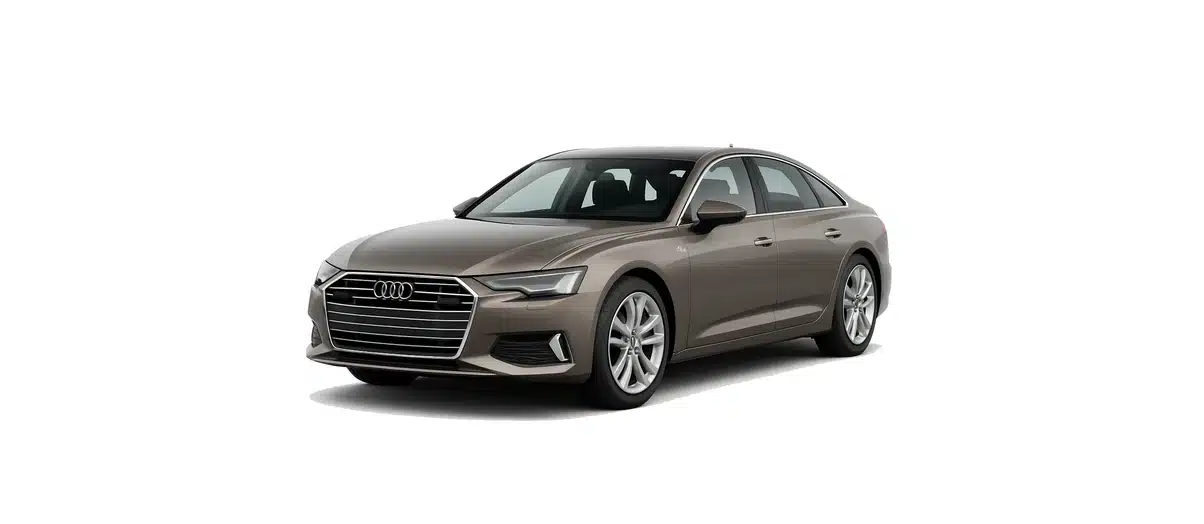
The Audi A6 TFSIe is a plug-in hybrid version of Audi’s executive saloon and Avant estate. For UK drivers, the most important point is that “A6 TFSIe” is often used as a broad charging-cable category, while Audi now markets the latest plug-in hybrid A6 as the A6 Saloon e-hybrid and A6 Avant e-hybrid. Older used examples are usually badged A6 50 TFSI e or A6 55 TFSI e.
This matters because the charging equipment is broadly similar — a Type 2 AC charging cable is the key cable for home wallboxes and many public AC chargers — but battery size and onboard AC charging speed vary by model year. The current A6 e-hybrid has a larger battery and can charge at up to 11 kW AC where the supply supports it. Many older A6 TFSI e models are limited to 7.4 kW AC.
It is also worth being clear about what the A6 TFSIe is not. It is not the fully electric Audi A6 e-tron. The A6 TFSIe/e-hybrid is a plug-in hybrid with a petrol engine, electric motor and AC charging port. It is designed for regular top-ups at home, work, hotels and public AC posts, rather than motorway DC rapid charging.
View Audi A6 TFSIe Charging Cables
Audi A6 TFSIe Battery and Charging Specifications
The UK A6 plug-in hybrid range has changed over time, so specifications should be checked against the exact car, especially if you are buying for a used vehicle. As a guide, the current UK A6 e-hybrid quattro uses a larger battery than the previous A6 TFSI e generation and supports a higher maximum AC charging rate.
For cable selection, the most consistent point is the connector type: the A6 plug-in hybrid uses a Type 2 AC inlet. Audi’s UK charging guidance distinguishes plug-in hybrids, which use AC charging, from fully electric models that can also use DC charging. That means there is no CCS rapid-charging cable requirement for the A6 TFSIe/e-hybrid PHEV.
Battery Options
The current UK A6 e-hybrid quattro, available as both Saloon and Avant, is listed with a 25.9 kWh gross battery capacity and around 20.7 kWh net/usable capacity. Audi UK quotes up to 64 miles of electric range for the Saloon and up to 63 miles for the Avant, depending on specification.
Previous A6 50 TFSI e and 55 TFSI e models sold before the latest e-hybrid naming used a smaller battery. Audi technical data for later C8 A6 TFSI e versions lists around 17.9 kWh gross and 14.4 kWh net, with WLTP electric range typically in the high-30s to mid-40s of miles depending on model and configuration.
You may also see older online references to a 14.1 kWh A6 TFSI e battery. Those figures relate to earlier information and should not be assumed for a current UK A6 e-hybrid. If you are unsure which version you have, check the registration, VIN, owner’s manual or Audi app rather than relying on a generic A6 TFSIe figure.
AC Charging Speed
The current A6 e-hybrid supports up to 11 kW AC charging. Audi UK material indicates a 0–100% charging time of about 2.5 hours where the correct AC supply is available. In practice, many UK homes have single-phase electricity, so a typical 7.4 kW home wallbox may be the practical maximum unless the property has a suitable three-phase supply.
Older A6 TFSI e models are generally listed with up to 7.4 kW AC charging. Connecting one of these cars to an 11 kW or 22 kW public AC post will not make the car charge at 11 kW or 22 kW; the onboard charger limits the rate. The charging post can offer more power than the car is able to accept.
For cable choice, a 32A Type 2 cable is the sensible starting point for UK home wallboxes and untethered public AC posts. If you own the current 11 kW-capable A6 e-hybrid and want to use three-phase public AC charging, make sure the cable is a three-phase Type 2 cable. For older 7.4 kW A6 TFSI e models, a single-phase 32A Type 2 cable is normally sufficient for the car’s maximum AC rate.
DC Rapid Charging Speed
DC rapid charging is not applicable to the Audi A6 TFSIe/e-hybrid plug-in hybrid. The car has an AC Type 2 charging inlet rather than the AC/DC arrangement used by fully electric Audis. As a result, there is no meaningful 10–80% rapid-charging time to quote for the A6 TFSIe PHEV.
This is normal for many plug-in hybrids. The A6 PHEV is intended to be charged little and often from AC sources: a home wallbox, workplace charger, destination charger or public AC post. On longer journeys, the petrol engine provides the flexibility that a PHEV owner expects, while the battery can be recharged when convenient.
Range and Efficiency
The current A6 e-hybrid’s official electric range is much stronger than older A6 TFSI e versions, thanks to the larger battery. Audi UK quotes up to 64 miles for the Saloon and up to 63 miles for the Avant, depending on trim and options. Real-world electric range will vary with temperature, speed, terrain, driving style, wheel size and use of cabin heating or air conditioning. In mixed UK use, many drivers should expect less than the laboratory figure; around the mid-40-mile region can be a realistic planning assumption for some journeys, although individual results will differ.
Older A6 50/55 TFSI e models with the 17.9 kWh gross battery are closer to a low-40-mile WLTP figure in many specifications. That makes model identification important: current e-hybrid range figures should not be applied to every used A6 TFSI e.
Charging at Home
Home charging is usually the most convenient way to run an A6 plug-in hybrid efficiently. If you can plug in overnight or during low-cost electricity periods, the car can begin many local journeys with a full battery. This is where PHEVs make most sense: frequent short trips can be completed using electric power, while the petrol engine remains available for longer journeys.
A dedicated Type 2 wallbox is the most practical home setup. For many UK properties this will be a 7.4 kW single-phase charger, which is well matched to older A6 TFSI e models and still useful for the current 11 kW-capable e-hybrid. A three-phase installation may allow the current model to reach its higher 11 kW AC capability, but that depends on the property’s electrical supply and charger installation.
A 3-pin charging lead is generally best suited as a backup or occasional charging solution, but can be used regularly if a qualified electrician has confirmed the socket and electrical installation are suitable for sustained EV charging. A domestic plug will charge much more slowly than a wallbox, so it is less convenient if you regularly return home with a low battery.
Public Charging
For public charging, focus on AC chargers rather than rapid DC chargers. Many supermarket, hotel, car park and workplace chargers use Type 2 sockets, so you will need your own Type 2 cable if the unit is untethered. Some AC chargers have a tethered cable, in which case you simply plug the fixed cable into the car.
The label on a public charger can be misleading if you do not account for the car’s onboard limit. A 22 kW AC post may be useful, but it will not charge an older A6 TFSI e at 22 kW. The car will still be limited to around 7.4 kW. The current A6 e-hybrid may be able to use up to 11 kW AC if the charger and cable support three-phase charging.
Because the A6 PHEV does not use DC rapid charging, it is not worth planning motorway stops around rapid chargers in the same way you would with a fully electric car. Instead, look for AC charging at places where the car will naturally be parked for a couple of hours.
Vehicle-Specific Features
The key vehicle-specific feature for charging is the difference between the older TFSI e name and the newer e-hybrid name. Both are plug-in hybrid A6 models and both use Type 2 AC charging, but they do not all share the same battery capacity or AC charging speed.
The current A6 e-hybrid has a larger usable battery and up to 11 kW AC capability, while previous A6 50/55 TFSI e models typically have a smaller battery and up to 7.4 kW AC charging. Audi also refers to cabin pre-conditioning on its plug-in hybrid models, which can make the car more comfortable before setting off, particularly when plugged in. Battery preconditioning for faster charging is not something to assume for this PHEV.
Vehicle-to-grid or vehicle-to-home capability should not be assumed for the A6 TFSIe/e-hybrid. The practical charging focus is straightforward AC charging via a Type 2 connection.
Charging Tips
- Identify your version first: current A6 e-hybrid and older A6 TFSI e models have different charging limits.
- Choose the right Type 2 cable: a 32A Type 2 cable suits typical UK home and public AC charging; choose a three-phase cable if you want to use 11 kW AC on a compatible current model.
- Do not expect DC rapid charging: the A6 plug-in hybrid is AC-only for charging.
- Use scheduled charging where available: charging overnight can help you make use of cheaper electricity tariffs if your energy plan supports them.
- Charge regularly: a PHEV is most efficient when the battery is topped up often, rather than being driven mainly as a petrol car.
- Check cable storage: keeping a Type 2 cable in the boot is useful for untethered public AC chargers.
Frequently Asked Questions
Is the Audi A6 TFSIe fully electric?
No. The Audi A6 TFSIe and newer A6 e-hybrid are plug-in hybrids. They have a petrol engine, an electric motor and a rechargeable battery. The fully electric model is the separate Audi A6 e-tron.
What charging cable does the Audi A6 TFSIe use?
It uses a Type 2 AC charging connection. For most UK drivers, a 32A Type 2 cable is the appropriate cable for home wallboxes and untethered public AC chargers.
Can the Audi A6 TFSIe use rapid chargers?
No, not in the DC rapid-charging sense. The A6 TFSIe/e-hybrid plug-in hybrid charges on AC, so CCS rapid charging and 10–80% rapid-charge times do not apply.
Why do some A6 plug-in hybrids charge at 7.4 kW and others at 11 kW?
It depends on the generation. Many older A6 50/55 TFSI e models support up to 7.4 kW AC. The current UK A6 e-hybrid supports up to 11 kW AC where the charging supply and cable allow it.
Should I buy a single-phase or three-phase Type 2 cable?
For older 7.4 kW A6 TFSI e models, a single-phase 32A Type 2 cable is normally enough. For the current 11 kW A6 e-hybrid, a three-phase Type 2 cable is useful if you plan to use 11 kW public or three-phase AC charging.
What This Means for Drivers
The Audi A6 plug-in hybrid is best understood as two closely related ownership cases. If you have a current A6 e-hybrid, you benefit from a larger battery, stronger official electric range and up to 11 kW AC charging. If you have an older A6 TFSI e, the same Type 2 charging approach applies, but the car is likely to have a smaller battery and a 7.4 kW AC limit.
In both cases, the best ownership experience comes from charging regularly. A home wallbox and a suitable Type 2 cable make it easier to start each day with electric range available. Public AC charging is useful when the car is parked for a while, but DC rapid charging should not be part of your charging plan for this PHEV.
Looking for a Charging Cable for Audi A6 TFSIe?
We offer Audi A6 TFSIe charging cables for UK home and public AC charging, including Type 2 options suitable for different A6 plug-in hybrid versions.
View Audi A6 TFSIe Charging Cables
Please note that this information is intended as a guide. Charging specifications may change due to model and year of manufacture. For precise information, always refer to your vehicle user manual.

