
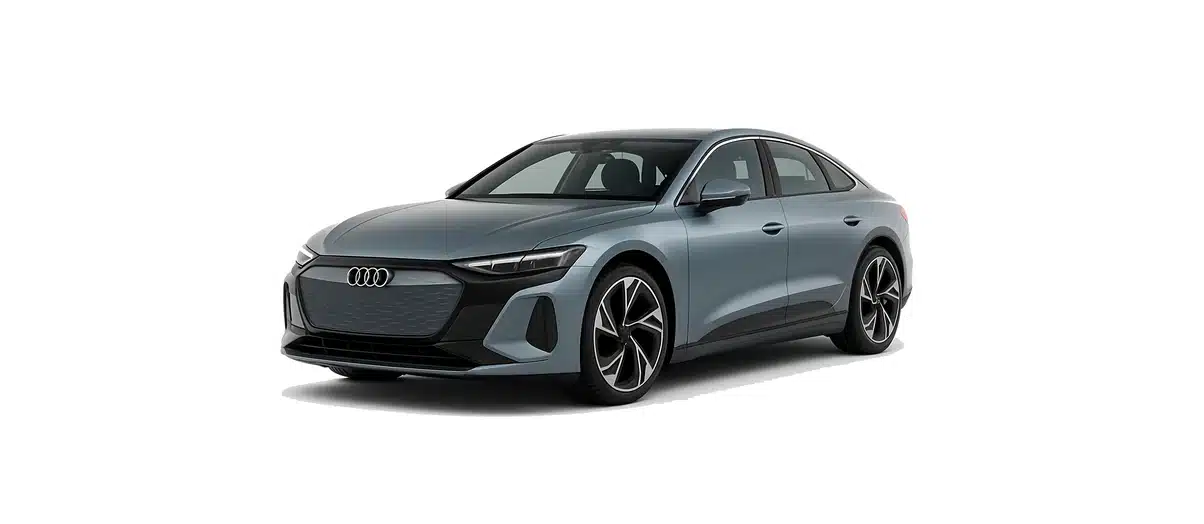
Audi A6 e-tron Charging Guide: Home Charging, Public Charging and Cable Selection
The Audi A6 e-tron is a fully electric executive model family available in the UK as both a Sportback and an Avant estate. It sits on Audi’s PPE electric platform and uses a UK/EU charging layout based around Type 2 AC charging and CCS Combo 2 DC rapid charging. For owners, the key point is that the A6 e-tron name covers several derivatives, so range, battery size and peak rapid charging speed can vary depending on whether you have an entry A6 e-tron, A6 e-tron performance or A6 e-tron quattro.
For day-to-day ownership, cable choice is simpler than the model line-up. A Type 2 to Type 2 Mode 3 charging cable is the main cable UK drivers need for untethered home wallboxes and public AC charging posts. Rapid charging on motorways and at high-power charging hubs uses the tethered CCS cable attached to the charger, so you do not need to carry a separate DC rapid charging cable.
View Audi A6 e-tron Charging Cables
Audi A6 e-tron Battery and Charging Specifications
The current UK Audi A6 e-tron is a battery electric vehicle, not a plug-in hybrid. It uses Type 2 AC charging for home and destination charging, and CCS Combo 2 for DC rapid charging. Audi UK lists 11 kW AC charging across current A6 e-tron variants reviewed, while DC peak charging depends on the battery and derivative.
| Vehicle | Audi A6 e-tron |
|---|---|
| Body styles | Sportback hatchback/saloon and Avant estate |
| Powertrain | Fully electric |
| AC charging connector | Type 2 |
| DC rapid charging connector | CCS Combo 2 |
| Standard AC charging | Up to 11 kW, where the supply supports it |
| Maximum DC charging | Up to 270 kW on 100 kWh versions; lower on some 83 kWh versions |
| Best official rapid charge figure | 10-80% in as little as around 21 minutes under ideal conditions |
Battery Options
The A6 e-tron is worth checking by exact derivative because there are two main battery sizes in the UK information currently available.
The entry A6 e-tron, in Sportback or Avant form, uses an 83 kWh gross battery with around 75.8 kWh usable capacity. Audi UK lists WLTP range figures of approximately 351-383 miles for the entry Sportback and 329-364 miles for the entry Avant, depending on specification and equipment.
The A6 e-tron performance and A6 e-tron quattro use the larger 100 kWh gross battery, with around 94.9 kWh usable capacity. In UK figures, the Sportback performance offers the longest listed WLTP range, up to 468 miles in its most efficient configuration. Avant performance, Sportback quattro and Avant quattro versions have different figures because of body style, drivetrain, wheel choice and equipment.
This variation matters when planning long journeys. It also explains why it is best not to assume that every A6 e-tron has the same battery or the same peak rapid charging capability.
AC Charging Speed
For normal UK charging, the A6 e-tron uses a Type 2 AC connection. Audi UK lists 11 kW AC charging for current A6 e-tron variants. In practice, many UK homes have a single-phase supply, so a typical dedicated home wallbox will deliver around 7.4 kW rather than the full 11 kW. To use 11 kW AC, you generally need a suitable three-phase supply and compatible charge point.
A Type 2 to Type 2 Mode 3 cable is the correct cable type for untethered AC charging. For a car with an 11 kW onboard charger, an 11 kW three-phase cable is a sensible match if you expect to use three-phase AC posts. A 7.4 kW single-phase cable can still work well for many home charging routines, but it may limit charging speed on three-phase AC chargers.
Some independent data sources note an optional 22 kW onboard charger for certain configurations or markets. However, Audi UK specification information reviewed for current UK A6 e-tron models lists 11 kW AC, so 22 kW should not be treated as standard. A higher-rated cable will not make the car charge faster unless the vehicle, charger and electrical supply all support the higher AC rate.
DC Rapid Charging Speed
DC rapid charging is where the A6 e-tron’s PPE platform and 800-volt architecture are most noticeable. The larger 100 kWh A6 e-tron performance and quattro derivatives can rapid charge at up to 270 kW when connected to a suitable high-power CCS charger. Audi quotes a best-case 10-80% charging time of around 21 minutes in ideal conditions.
The smaller 83 kWh versions have lower peak DC figures in the available data. Audi UK lists the entry Sportback at 225 kW DC, while some Avant entry information should be checked carefully because published figures may differ between sources. The practical advice is to check your exact model and not assume every A6 e-tron will reach 270 kW.
As with any EV, the maximum rapid charging rate is not held for the whole session. Actual speed depends on charger capability, battery temperature, starting state of charge, battery condition and the car’s charging curve. For the best result on a long trip, aim to arrive at a high-power charger with a relatively low state of charge and use the car’s navigation to prepare the battery before arrival.
Range and Efficiency
Official WLTP range for the Audi A6 e-tron varies widely across the line-up. UK figures run from around 329 miles for some entry Avant versions up to 468 miles for the most efficient Sportback performance configuration. That does not mean every driver will see those figures in every season. Motorway speed, cold weather, wheel size, roof loads, passenger weight and heating use can all reduce real-world range.
Independent UK estimates suggest a real-world figure of around 300 miles for the 83 kWh Sportback and around 370 miles for the Sportback performance in mixed conditions. These are useful planning estimates rather than guarantees. For winter motorway driving, it is sensible to leave a margin rather than planning every stop down to the last few miles.
Charging at Home
Home charging is likely to be the most convenient and cost-effective way to run an A6 e-tron for many UK drivers. With a dedicated 7.4 kW single-phase wallbox, overnight charging will comfortably cover most daily mileage, even though a complete low-to-full charge of the larger battery can take longer than a single evening if the battery is nearly empty.
Most owners will not need to charge from empty to full every day. A practical routine is to plug in when convenient and set a daily charge limit of around 80% for regular use, then use 100% before longer journeys if the owner’s manual allows and you plan to leave soon after charging. This helps reduce unnecessary time spent at a very high state of charge.
A 3-pin charger is generally best suited as a backup or occasional charging solution, but can be used regularly if a qualified electrician has confirmed the socket and electrical installation are suitable for sustained EV charging. For a large-battery car such as the A6 e-tron, a domestic 3-pin socket is also much slower than a dedicated wallbox, so it is not the most practical main charging method for most drivers.
Public Charging
Public AC charging uses the same Type 2 connection as a home wallbox. Many public AC posts are untethered, so you will usually need to bring your own Type 2 cable. These chargers are common at hotels, workplaces, car parks, supermarkets and town-centre locations. They are useful when the car will be parked for several hours rather than for a quick motorway stop.
For longer journeys, use CCS rapid or ultra-rapid chargers. These have the cable attached to the charger, so your own Type 2 cable is not used. To get the strongest rapid charging performance, choose high-power chargers capable of supplying well above 150 kW, especially if you have a 100 kWh A6 e-tron capable of up to 270 kW under suitable conditions.
The A6 e-tron is also listed with Plug & Charge support for compatible charging stations. Where supported by the charger network and account set-up, this can simplify authentication by allowing the car and charger to communicate automatically when plugged in.
Vehicle-Specific Features
The Audi A6 e-tron is built on the PPE platform and uses an 800-volt electrical architecture. This helps support high DC charging rates on suitable chargers and contributes to the car’s long-distance usability.
Battery preconditioning is confirmed for the A6 e-tron model series. For rapid charging, the most important owner habit is to set the high-power charger as a destination in the Audi navigation or e-tron route planner. This allows the car’s thermal management system to prepare the battery before arrival, improving the chance of stronger charging speeds.
A heat pump is treated as standard in the current UK information. In cold weather, this can help with cabin heating efficiency compared with relying only on resistive heating, although winter range will still be affected by temperature, road conditions and driving speed.
Vehicle-to-load, vehicle-to-home and vehicle-to-grid capability should not be assumed for the A6 e-tron. The data reviewed does not list V2L, V2H or V2G as supported features for the checked UK-style A6 e-tron information.
Charging Tips
- Choose the right AC cable: a Type 2 to Type 2 Mode 3 cable is the main cable for untethered home and public AC charging.
- Match the cable to your use: if you use three-phase AC charging, an 11 kW three-phase Type 2 cable is a practical match for the A6 e-tron’s listed AC capability.
- Do not expect 22 kW automatically: a 22 kW cable or charger will only help if your exact car has a compatible onboard charger and the supply supports it.
- Use CCS for fast stops: rapid charging uses the tethered CCS cable attached to the public charger.
- Precondition before HPC charging: enter the charger into the Audi navigation system so the battery can be prepared before arrival.
- Keep daily charging simple: for routine use, an 80% charge limit is often more practical than repeatedly charging to 100%.
- Check your derivative: Sportback, Avant, performance, quattro and entry versions have different range and charging figures.
Frequently Asked Questions
What charging cable does the Audi A6 e-tron use?
For UK AC charging, the Audi A6 e-tron uses a Type 2 connector. A Type 2 to Type 2 Mode 3 cable is suitable for untethered home wallboxes and public AC charging posts.
Can the Audi A6 e-tron use rapid chargers?
Yes. The A6 e-tron uses CCS Combo 2 for DC rapid charging. Rapid chargers have a tethered cable, so you use the cable attached to the charger rather than your own Type 2 AC cable.
Does every Audi A6 e-tron rapid charge at 270 kW?
No. The larger 100 kWh versions are listed at up to 270 kW DC, while the 83 kWh entry versions have lower peak figures in the available data. Check the specification of your exact derivative.
Is 11 kW home charging possible?
It can be possible where you have a suitable three-phase supply and compatible charge point. Many UK homes are single-phase, where a dedicated wallbox will typically provide around 7.4 kW.
Is the Audi A6 e-tron a plug-in hybrid?
No. The A6 e-tron covered here is a fully electric vehicle. It should not be confused with combustion or plug-in hybrid Audi A6 or A7 models.
What This Means for Drivers
The Audi A6 e-tron is a strong long-distance EV, but it is important to be variant-aware. Entry cars use the smaller 83 kWh battery, while performance and quattro models use the larger 100 kWh battery. Sportback and Avant models also have different range figures. For charging hardware, however, the everyday advice remains consistent: use Type 2 AC charging at home and at destination chargers, and use CCS rapid charging for long-distance stops.
For most UK owners, a dedicated home wallbox and a good Type 2 cable will cover the majority of charging. Rapid charging is best reserved for longer trips, where using the Audi route planner and choosing high-power CCS chargers will help the car deliver its strongest charging performance.
Looking for a Charging Cable for Audi A6 e-tron?
If you need a compatible Type 2 charging cable for your Audi A6 e-tron, EVChargingCableStore offers options suitable for UK home wallboxes and public AC charging posts.

