
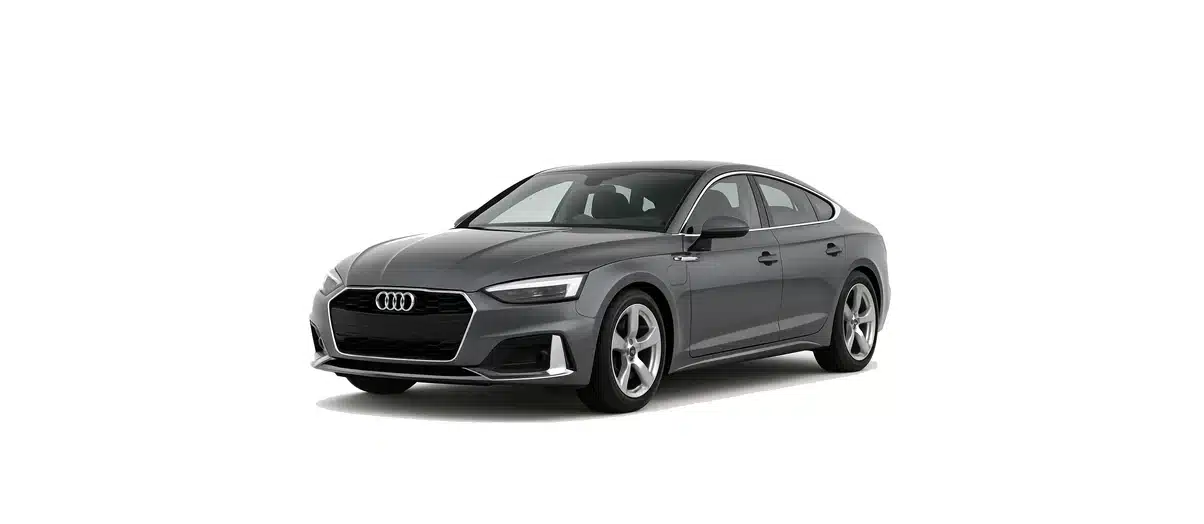
Audi A5 TFSIe Charging Guide: Home Charging, Public Charging and Cable Selection
The Audi A5 TFSIe name is still widely used by drivers searching for plug-in hybrid charging information, but Audi UK now lists the current UK-market plug-in A5 as the A5 Saloon e-hybrid and A5 Avant e-hybrid. In practical ownership terms, the key point is the same: this is a plug-in hybrid electric vehicle, not a fully electric car. It combines a petrol engine with an electric motor and a rechargeable high-voltage battery, giving useful electric-only running for local journeys while retaining petrol flexibility for longer trips.
For charging, the current Audi A5 e-hybrid uses Type 2 AC charging. The most relevant decisions for UK owners are whether to charge from a 7 kW home wallbox, use 11 kW AC charging where available, and choose the right Type 2 cable for home, workplace and public charging. DC rapid charging is not the focus for this model.
View Audi A5 TFSIe Charging Cables
Audi A5 TFSIe Battery and Charging Specifications
Current UK Audi A5 e-hybrid models are offered in both Saloon and Avant estate body styles. Audi UK currently quotes the A5 e-hybrid quattro 299PS, with a plug-in hybrid system based around a 2.0 TFSI petrol engine and an electric motor. Although many owners and search results still use “TFSIe”, Audi’s newer naming uses “e-hybrid” for these plug-in hybrid models.
The charging connector to be aware of is Type 2 AC. Audi MediaCenter also refers to a standard mode 3 Type 2 charging cable for home and public AC charging. For UK drivers, that means a Type 2 to Type 2 cable is the normal cable for untethered home wallboxes, workplace charge points and many public AC posts.
- Vehicle type: plug-in hybrid electric vehicle (PHEV)
- Body styles: Saloon and Avant estate
- Battery: 25.9 kWh gross, with up to 20.7 kWh net capacity quoted by Audi
- Charging port: Type 2 AC
- Maximum AC charging: 11 kW, where suitable infrastructure is available
- Typical 7 kW home wallbox time: around 3 hours 45 minutes from 0-100% under Audi’s stated optimum conditions
- Maximum AC charge time: as little as around 2.5 hours from 0-100% at 11 kW
Battery Options
For the current UK A5 e-hybrid information published by Audi, the battery is listed as a 25.9 kWh pack, with 20.7 kWh net capacity also quoted in Audi battery and range information. This is large for a plug-in hybrid and supports the car’s strong official electric range figures.
Unlike a fully electric car, the A5 TFSIe/e-hybrid does not rely solely on its battery for every journey. If the battery is depleted, the petrol engine allows the car to continue operating as a hybrid. However, regular charging is what allows a PHEV to deliver its best electric-running benefits. Owners who can top up overnight, at work or during regular parking stops will usually get the most from the electric side of the drivetrain.
AC Charging Speed
The current Audi A5 e-hybrid has a quoted maximum AC charging capacity of 11 kW. Audi UK states that a 0-100% charge can take as little as approximately 2.5 hours at the maximum AC rate. This depends on using suitable AC infrastructure, which usually means access to a compatible three-phase AC supply.
Many UK homes are single-phase and typically use a 7 kW or 7.4 kW home wallbox. Audi’s UK battery and range information quotes a 0-100% charging time of around 3 hours 45 minutes on a 7 kW home wallbox under optimum conditions. For most owners, this is still more than quick enough for overnight charging and daily top-ups.
It is also worth understanding the difference between the charge point rating and the car’s onboard charger. Even if you connect to a 22 kW AC public post, the A5 e-hybrid will not charge above its own 11 kW AC limit. A higher-rated post may still be useful if it is available and convenient, but it will not make the car charge at 22 kW.
DC Rapid Charging Speed
Current model-specific data for the Audi A5 e-hybrid supports Type 2 AC charging. You should not plan around CCS or DC rapid charging for this plug-in hybrid unless you have verified support for a specific vehicle variant from an official source.
This is not usually a disadvantage for a PHEV of this type. The battery is designed to be topped up at home, at work or on public AC charge points rather than at motorway rapid chargers. For longer trips, the petrol engine provides the long-distance flexibility, while charging is most useful before departure, at a destination or during a longer parking stop.
Range and Efficiency
Audi UK quotes official electric range figures that vary by body style and specification. The current A5 Saloon e-hybrid is listed with an official electric range of approximately 62-67 miles WLTP, while the A5 Avant e-hybrid is listed at approximately 60-66 miles WLTP. These figures should be treated as comparison figures rather than guaranteed real-world results.
Real-world electric range will depend on factors such as temperature, route type, speed, traffic, wheel and tyre specification, vehicle load, driving style, battery age and use of heating or air conditioning. In cold weather, on faster roads or with frequent hard acceleration, the electric range may be lower than the official WLTP figure. In gentle urban and suburban use, regular charging can still make a significant difference to fuel use.
Audi MediaCenter notes that regenerative braking can recover energy into the high-voltage battery, with recuperation of up to 88 kW referenced for the A5 e-hybrid system. Regeneration helps improve efficiency, particularly in stop-start traffic, but it is not a substitute for plugging in. To make the most of the car as a plug-in hybrid, routine charging remains important.
Charging at Home
Home charging is likely to be the most convenient option for most Audi A5 TFSIe owners. A dedicated 7 kW home wallbox can recharge the battery from empty to full in around 3 hours 45 minutes under Audi’s stated optimum conditions. In everyday use, many drivers will not arrive home with a completely empty battery, so shorter top-ups may be enough.
If your wallbox is untethered, you will need a Type 2 to Type 2 charging cable. A tethered wallbox with a fixed Type 2 lead can also be suitable, provided it is installed correctly and compatible with the vehicle. Home charging is especially useful for a plug-in hybrid because it encourages frequent charging: plug in when you park, start the next journey with electric range available, and use the petrol engine less often on short trips.
A 3-pin domestic charger is generally best suited as a backup or occasional charging solution, but can be used regularly if a qualified electrician has confirmed the socket and electrical installation are suitable for sustained EV charging. For regular home charging, a professionally installed wallbox is usually the neater, faster and more convenient option.
Public Charging
For public charging, look for AC charge points with a Type 2 connection. Many supermarket, town-centre, hotel, workplace and destination chargers use AC charging, and these are well suited to a PHEV that may be parked for a few hours. If the post is untethered, you will need your own Type 2 to Type 2 cable.
Where an 11 kW AC supply is available and compatible, the A5 e-hybrid can take advantage of its maximum AC charging capability and charge more quickly than it would on a typical 7 kW home wallbox. However, many public AC posts vary in output, and the actual charging speed can depend on the site, available power, vehicle state of charge and charging conditions.
Because this is a plug-in hybrid with a useful official electric range rather than a long-range BEV, public charging is often most valuable at destinations rather than en route. For example, charging while parked at work, during a shopping trip or at a hotel can add meaningful electric miles without changing your journey plan.
Vehicle-Specific Features
The current A5 e-hybrid sits on Audi’s Premium Platform Combustion architecture and is designed to combine petrol and electric driving. Audi refers to auxiliary air conditioning or remote cabin pre-conditioning features, which can help prepare the cabin before a journey when conditions and settings allow. This should not be confused with confirmed traction-battery preconditioning for rapid charging.
The most important vehicle-specific point for cable selection is that the A5 TFSIe/e-hybrid is an AC-charging plug-in hybrid. There is no need to choose a cable based on DC rapid charging, and a 22 kW public AC post will still be limited by the vehicle’s 11 kW onboard AC charging capability.
Charging Tips
- Charge little and often: PHEVs work best when they are plugged in regularly, especially overnight or during workplace parking.
- Use a Type 2 cable: A Type 2 to Type 2 cable is the relevant cable for untethered home wallboxes and many public AC posts.
- Do not chase DC rapid charging: Plan around AC charging for this model rather than motorway rapid chargers.
- Know the 11 kW limit: Faster AC infrastructure can help up to the car’s limit, but the vehicle will not charge above 11 kW AC.
- Pre-set cabin comfort where available: Using Audi’s cabin pre-conditioning features while plugged in may help comfort before departure, depending on vehicle settings and conditions.
- Expect seasonal variation: Electric range can fall in cold weather, at higher speeds or with heavy climate control use.
Frequently Asked Questions
Is the Audi A5 TFSIe fully electric?
No. The current Audi A5 e-hybrid/TFSIe is a plug-in hybrid. It has a petrol engine, an electric motor and a rechargeable battery, so it can drive on electric power for shorter journeys but is not a battery-electric vehicle.
What charging cable does the Audi A5 TFSIe use?
For the current A5 e-hybrid, the relevant connection is Type 2 AC. A Type 2 to Type 2 cable is suitable for untethered home wallboxes and many public AC charge points.
How long does the Audi A5 TFSIe take to charge at home?
Audi UK quotes around 3 hours 45 minutes for a 0-100% charge using a 7 kW home wallbox under optimum conditions. Actual times can vary depending on temperature, starting charge level and charging conditions.
Can the Audi A5 TFSIe charge at 11 kW?
Yes, Audi quotes a maximum AC charging capacity of 11 kW for the current A5 e-hybrid. To achieve this, you need suitable AC charging infrastructure. Many UK homes are limited to single-phase 7 kW or 7.4 kW wallbox charging.
Will a 22 kW public charger make it charge faster?
Not beyond the car’s onboard AC limit. A 22 kW AC post may be compatible, but the A5 e-hybrid will only charge up to its maximum supported AC rate of 11 kW.
What is the electric range of the Audi A5 e-hybrid?
Audi UK quotes around 62-67 miles WLTP for the A5 Saloon e-hybrid and around 60-66 miles WLTP for the A5 Avant e-hybrid, depending on version and specification. Real-world range will vary.
What This Means for Drivers
The Audi A5 TFSIe, now marketed in the UK as the A5 e-hybrid, is best approached as a car that rewards regular AC charging. Its battery is large enough to cover many local journeys on electric power, but it is still a plug-in hybrid rather than a fully electric car. A 7 kW home wallbox is likely to suit most owners, while 11 kW AC charging can be useful at compatible workplace or public charge points.
For cable selection, the key is simple: choose a suitable Type 2 to Type 2 cable for AC charging. You do not need to plan around CCS rapid charging for the current model, and you should remember that 22 kW AC infrastructure will not overcome the car’s 11 kW onboard charging limit.
Looking for a Charging Cable for Audi A5 TFSIe?
If you need a Type 2 cable for home, workplace or public AC charging, EVChargingCableStore offers Audi A5 TFSIe charging cables suitable for UK plug-in hybrid charging.

