
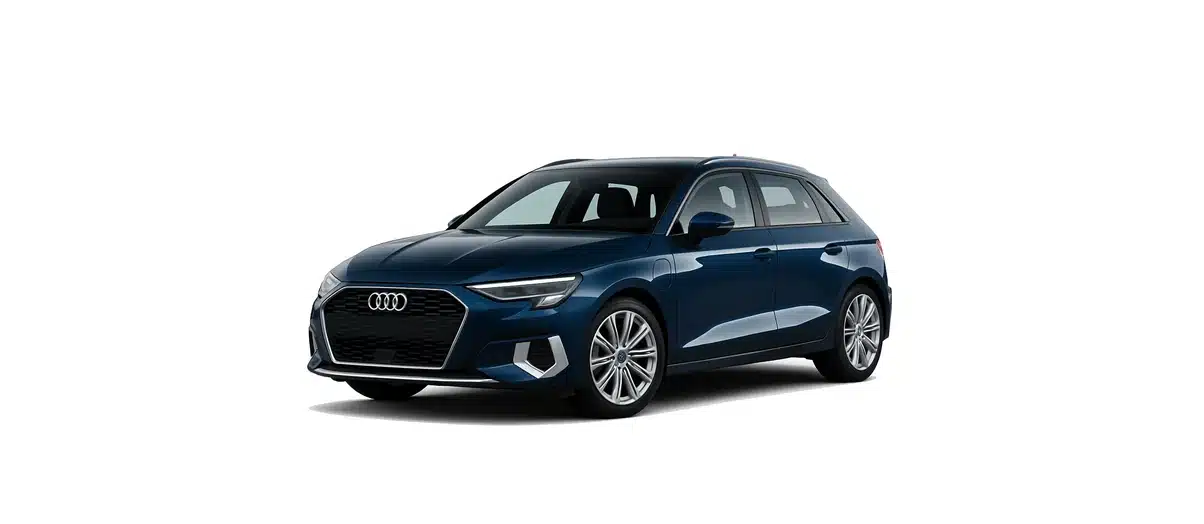
The Audi A3 is a familiar premium hatchback, but its charging requirements depend heavily on which plug-in hybrid generation you own. The current UK Audi A3 Sportback TFSI e is not a fully electric car; it is a plug-in hybrid, combining a petrol TFSI engine with an electric motor and a rechargeable battery. For many drivers, that means short journeys can be completed on electric power, while longer trips can still use petrol without the charging planning required by a full battery-electric vehicle.
The important point is that not every plug-in Audi A3 charges in the same way. Older A3 Sportback e-tron models, the previous A3 40 TFSI e and the refreshed current A3 Sportback TFSI e have different battery sizes and charging capabilities. The latest UK model is a major step forward, with a 19.7 kWh net battery, up to 11 kW AC charging and Audi-quoted DC rapid charging up to 50 kW. Many earlier A3 plug-in hybrids are Type 2 AC-only and should not be treated as rapid-charging cars.
Audi A3 Battery and Charging Specifications
For UK buyers looking at the current model, the charging-relevant Audi A3 is the A3 Sportback TFSI e 204PS S tronic, refreshed for the 2024/2025 model year and listed by Audi UK in 2026. Audi states a net battery capacity of 19.7 kWh, while Audi MediaCenter technical data gives 25.7 kWh gross and 19.7 kWh net for the updated model.
The current car can charge from AC at up to 11 kW where a suitable supply is available. Audi UK also quotes DC charging at up to 50 kW, with a 10-80% charge possible in as little as 29 minutes under suitable conditions. This is unusual for a plug-in hybrid, as many PHEVs are AC-only.
For the current DC-capable UK/EU A3 Sportback TFSI e, the charging arrangement is understood as Type 2 for AC charging and CCS Combo 2 for DC rapid charging. However, because older A3 plug-in hybrids differ materially, owners should check the vehicle’s charge port or handbook before buying accessories or planning public charging stops.
Battery Options
The Audi A3 plug-in hybrid timeline is where confusion often begins. The model name may look similar, but the charging hardware and battery size can vary significantly by model year.
| Model / generation | Battery information | Charging note |
|---|---|---|
| Current A3 Sportback TFSI e 204PS / 40 TFSI e, 2024 facelift onwards | 25.7 kWh gross / 19.7 kWh net | Up to 11 kW AC and up to 50 kW DC where supported |
| Previous A3 Sportback 40 TFSI e, approx. 2020-2024 UK cars | 13 kWh gross battery quoted for earlier 8Y model | Generally AC-only; do not assume DC rapid charging |
| Older A3 Sportback e-tron, approx. 2014-2018 | 8.8 kWh battery | Different PHEV generation; charging figures are not the same as the current car |
If you are buying a used A3 plug-in hybrid, do not rely only on the badge or advert wording. Check the model year, the vehicle handbook and the physical socket. A current DC-capable car will have different public charging options from an older Type 2 AC-only A3 PHEV.
AC Charging Speed
AC charging is the most important day-to-day charging method for an Audi A3 plug-in hybrid. For the current A3 Sportback TFSI e, Audi quotes AC charging up to 11 kW. Audi MediaCenter states that charging at up to 11 kW can take around 2.5 hours where suitable three-phase AC charging is available.
In the UK, many home wallboxes are single-phase 7 kW units. On this type of home charger, the car will normally be limited by the supply rather than by its maximum 11 kW onboard AC capability, so a full charge will take longer than the best-case 11 kW figure. Even so, a 7 kW wallbox is still very practical for a plug-in hybrid of this size and should comfortably support overnight charging.
A Type 2 charging cable is the key cable for the current A3 TFSI e when using untethered home wallboxes and public AC posts. For many owners, this will be the cable used most often.
DC Rapid Charging Speed
The current UK Audi A3 Sportback TFSI e is notable because Audi quotes DC rapid charging at up to 50 kW. Audi UK states that a 10-80% DC charge can take as little as 29 minutes in suitable conditions. Audi technical information also refers to a 0-70% charge in around 30 minutes at 50 kW, so it is worth paying attention to the state-of-charge window being discussed.
DC rapid charging is relevant only to the current DC-capable A3 Sportback TFSI e. Earlier A3 Sportback e-tron and many pre-facelift A3 40 TFSI e models do not have the same rapid charging capability. If your car has only a Type 2 AC inlet, it cannot use a CCS rapid charger in the same way as the latest model.
You do not need to buy a separate CCS rapid-charging cable for UK public DC chargers. Rapid chargers use tethered cables attached to the charging unit. Your own cable is mainly for AC charging on untethered posts and wallboxes.
Range and Efficiency
Audi UK quotes up to 88 miles of electric range for the current A3 Sportback TFSI e. This is an official WLTP figure, not a guaranteed real-world distance. Actual electric range will vary depending on weather, speed, route type, tyre choice, vehicle load, accessory use and driving style.
For a plug-in hybrid, the best efficiency usually comes from charging frequently and using electric power for commuting, school runs, local errands and town driving. The petrol engine is then available for longer journeys or when the battery is depleted. If you rarely plug in, the A3 TFSI e will behave more like a petrol hybrid while carrying a larger battery, so the running-cost benefit will be reduced.
Older A3 plug-in hybrids have shorter electric ranges because their batteries are smaller. For example, the previous A3 Sportback 40 TFSI e used a 13 kWh battery and was associated with an official electric range of up to around 41 miles. The older A3 Sportback e-tron had an 8.8 kWh battery. These cars should not be compared directly with the current long-range A3 TFSI e.
Charging at Home
Home charging is usually the most convenient and cost-effective way to run an Audi A3 plug-in hybrid. If you can charge overnight, the current A3 TFSI e can start most days with a useful electric range, reducing petrol use on local trips.
A dedicated home wallbox is the preferred solution for regular charging. A typical UK 7 kW wallbox will be slower than the car’s maximum 11 kW AC capability, but it is still well matched to overnight charging. Drivers with access to three-phase charging may be able to make better use of the car’s 11 kW AC capability, subject to the charger, supply and installation.
A 3-pin charger is generally best suited as a backup or occasional charging solution, but can be used regularly if a qualified electrician has confirmed the socket and electrical installation are suitable for sustained EV charging. Avoid using extension leads, damaged sockets or unknown outdoor supplies for EV charging.
For cable choice, most A3 plug-in hybrid owners using untethered AC charging will need a Type 2 cable. If your wallbox is tethered, the cable is permanently attached to the charger, but it can still be useful to keep a separate Type 2 cable in the car for public AC charging.
Public Charging
Public charging for the Audi A3 depends on model year. With the current DC-capable A3 Sportback TFSI e, you can use public AC charging and, where appropriate, compatible DC rapid chargers. With older Type 2 AC-only A3 plug-in hybrids, public rapid chargers with CCS connectors will not be usable for DC charging.
For everyday use, public AC charging at workplaces, supermarkets, hotels and town-centre car parks is often a better match for a PHEV than expensive rapid charging. A plug-in hybrid battery is relatively small compared with a full EV battery, so regular top-ups at home or work can be more economical than relying on rapid chargers.
When using public AC posts, check whether the unit is tethered or untethered. Many AC posts require you to bring your own Type 2 cable. On DC rapid chargers, the cable is attached to the charger, so no separate rapid charging cable is required.
Vehicle-Specific Features
The Audi A3 Sportback TFSI e is based on Volkswagen Group’s MQB plug-in hybrid architecture. It is a front-wheel-drive PHEV with a petrol engine, electric motor and a battery positioned under the rear-seat/floor area. The body style for the current UK model is the five-door A3 Sportback hatchback.
The main vehicle-specific charging feature is the difference between generations. The latest facelifted A3 TFSI e has a much larger battery than earlier A3 plug-in hybrids and introduces DC rapid charging capability in current UK data. Earlier A3 e-tron and A3 40 TFSI e cars were more limited and should be treated as different charging cases.
If you are unsure which version you have, look at the registration year, trim information, vehicle documents and the charge port. A photo of the socket can also help identify whether the car is Type 2 AC-only or has a CCS-style lower section for DC charging.
Charging Tips
- Check your model year first: current A3 TFSI e charging figures should not be applied to all Audi A3 plug-in hybrids.
- Use a Type 2 cable for AC charging: this is the main cable for untethered home and public AC charging.
- Do not buy a separate CCS cable: UK DC rapid chargers have tethered cables.
- Plug in frequently: a PHEV delivers its best running-cost benefits when the battery is charged often.
- Use rapid charging selectively: DC charging can be useful on the current model, but home or workplace charging is usually cheaper.
- Keep older models in mind: an A3 e-tron or earlier A3 40 TFSI e may be Type 2 AC-only.
Frequently Asked Questions
Is the Audi A3 a fully electric car?
No. UK Audi A3 plug-in models are plug-in hybrids, not battery-electric vehicles. The current A3 Sportback TFSI e combines a petrol engine with an electric motor and an externally rechargeable battery.
What charging cable does an Audi A3 plug-in hybrid need?
For AC charging, a Type 2 cable is the key cable for the current A3 TFSI e and many earlier A3 plug-in hybrids. Because model years differ, check your vehicle socket before buying.
Can the Audi A3 TFSI e rapid charge?
The current UK A3 Sportback TFSI e is quoted by Audi with DC charging up to 50 kW. Older A3 e-tron and many earlier A3 40 TFSI e cars are generally AC-only, so do not assume rapid charging unless your specific car supports it.
How long does the current Audi A3 TFSI e take to charge?
Audi quotes up to 11 kW AC charging, with around 2.5 hours possible under suitable three-phase conditions. On a typical UK 7 kW single-phase home wallbox, expect charging to take longer. Audi also quotes 10-80% DC charging in as little as 29 minutes for the current DC-capable model.
Should I charge an Audi A3 PHEV every day?
If convenient, frequent charging is usually the best way to reduce petrol use. Many PHEV owners charge overnight or at work so local journeys can be completed mostly on electric power.
What This Means for Drivers
The Audi A3 charging picture is straightforward once you identify the exact generation. The current A3 Sportback TFSI e is a more capable plug-in hybrid than earlier versions, with a larger 19.7 kWh net battery, a WLTP electric range of up to 88 miles, 11 kW AC charging and Audi-quoted 50 kW DC rapid charging. That makes it unusually flexible for a PHEV.
However, used A3 plug-in hybrids vary significantly. An older A3 Sportback e-tron or previous A3 40 TFSI e may have a smaller battery and Type 2 AC-only charging. Before buying a cable or planning around rapid chargers, confirm your model year and charge port. For most owners, the most useful setup remains simple: a suitable Type 2 cable, a safe home charging arrangement and the habit of plugging in regularly.
Looking for a Charging Cable for Audi A3?
We can help you choose a suitable Audi A3 charging cable, but please check your model year or charge port first so you select the right Type 2 cable for your specific plug-in hybrid.
Please note that this information is intended as a guide. Charging specifications may change due to model and year of manufacture. For precise information, always refer to your vehicle user manual.

