
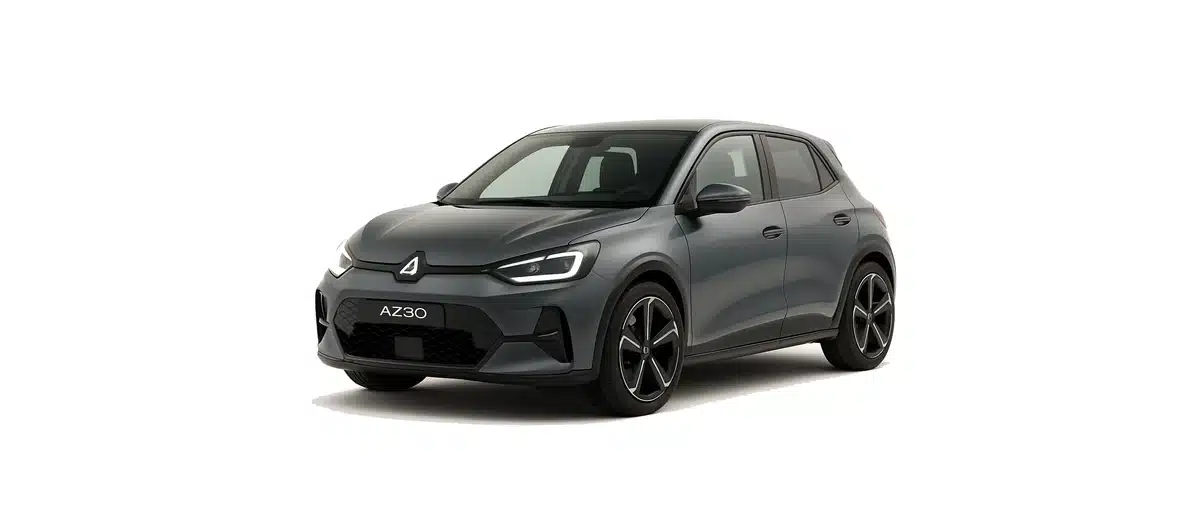
Alpine A290 Charging Guide: Home Charging, Public Charging and Cable Selection
The Alpine A290 is a 5-door electric hot hatchback designed to bring Alpine’s performance character into a compact battery-electric package. For UK drivers, the good news is that charging is straightforward: the A290 uses the familiar Type 2 connector for AC charging and CCS Combo 2 for DC rapid charging, so it fits neatly into the UK public charging network and typical home wallbox setup.
Where the A290 needs a little more explanation is cable choice. Official UK specifications list 11 kW AC charging, which is useful if you have access to three-phase AC charging. However, most UK homes are single-phase, so a typical domestic wallbox will usually charge at up to 7.4 kW. Choosing the right Type 2 cable therefore means balancing the car’s 11 kW capability with everyday UK charging reality.
View Alpine A290 Charging Cables
Alpine A290 Battery and Charging Specifications
The Alpine A290 is a battery-electric vehicle only; it is not a hybrid, plug-in hybrid or range-extender. Current UK-market versions use a front-mounted electric motor, with power output depending on trim. Alpine UK material lists 180 hp / 130 kW for the 180 hp version and 220 hp / 160 kW for higher-output versions.
UK A290 models use Type 2 AC charging and CCS Combo 2 DC rapid charging. In practical terms, this means a Type 2 to Type 2 cable is the relevant cable for untethered AC charge points, while DC rapid chargers use their own tethered CCS cable. You do not need to buy a separate DC rapid-charging cable for motorway or public rapid charging.
- Vehicle type: battery-electric 5-door hot hatchback
- Battery: 52 kWh customer-facing capacity
- AC charging: up to 11 kW
- DC rapid charging: up to 100 kW
- AC connector: Type 2
- DC connector: CCS Combo 2
- Typical rapid-charging window: around 10-80% for longer journeys
Battery Options
The UK-market Alpine A290 is listed with a single 52 kWh battery across the current range. EV Database estimates the total battery size at around 55 kWh with 52 kWh usable, while Alpine UK describes the battery capacity as 52 kWh. For owners, the useful figure to think about is the 52 kWh customer-facing capacity, because it is the figure most closely aligned with charging time and range planning.
Earlier UK brochure material used some different trim names, while the current UK configurator/brochure context centres on GT+, GT Performance+ and GTS+. Range and performance can vary by output and trim, so it is best not to treat one WLTP figure as applying universally to every A290.
AC Charging Speed
The Alpine A290 supports AC charging at up to 11 kW. That figure is important because it indicates three-phase AC capability, commonly found at some workplace chargers, destination chargers and certain public AC posts. At 11 kW, a full charge from empty to 100% is estimated at roughly 5 hours 45 minutes under suitable conditions.
At home in the UK, however, the most common practical setup is a single-phase 7.4 kW wallbox. On a 7.4 kW home charger, an empty-to-full charge is likely to take around 8 hours 30 minutes, depending on temperature, charger behaviour, battery state and charging losses. For most drivers, that still means the A290 can be charged comfortably overnight.
For cable selection, a Type 2 to Type 2 Mode 3 cable is the correct AC cable. A 32 amp, 3-phase, 22 kW-rated Type 2 cable is a versatile choice because it can support the A290’s 11 kW three-phase AC charging where available, while also working on single-phase home and public AC chargers. The car will limit charging to its own maximum, so using a 22 kW-rated cable does not make the A290 charge at 22 kW.
DC Rapid Charging Speed
For longer journeys, the Alpine A290 can use CCS rapid chargers at up to 100 kW. Alpine’s own performance information quotes 15-80% DC fast charging in 30 minutes. For trip planning, a more typical 10-80% rapid-charge estimate is about 35 minutes, which is a useful real-world planning figure.
As with most EVs, charging power is not constant from 0-100%. The car will usually charge fastest when the battery is lower and warm enough, then slow down as it approaches a higher state of charge. This is why 10-80% is a sensible target on road trips. Charging beyond 80% can be useful when you need the extra range, but it will normally take disproportionately longer.
Range and Efficiency
Official UK WLTP range depends on version. Current UK brochure information lists around 377 km, or about 234 miles, for the 180 hp version, and around 361 km, or about 224 miles, for the 220 hp versions. Those figures are laboratory test values and are best used for comparison rather than as a guaranteed everyday result.
EV Database gives a real-world estimate of around 190 miles for the 220 hp A290. Actual range will depend on speed, outside temperature, tyre choice, wheel size, elevation, driving style, cabin heating or cooling use and how often the car is driven enthusiastically. As a performance-focused small EV, the A290 can be efficient in everyday use, but rapid acceleration and sustained motorway speeds will reduce range.
Charging at Home
Home charging is likely to be the most convenient and cost-effective way to run an Alpine A290. A dedicated 7.4 kW home wallbox will suit many UK households and can add a substantial amount of range overnight. If you have a three-phase electrical supply and a suitable three-phase charger, the A290’s 11 kW AC capability may allow quicker home charging, but this is less common in typical domestic properties.
A tethered home charger has its own cable attached, so you simply plug in. An untethered wallbox requires your own Type 2 cable, which you can also use at many public AC chargers. If you use public AC charging as part of your routine, keeping a Type 2 cable in the car is sensible.
A 3-pin charger is generally best suited as a backup or occasional charging solution, but can be used regularly if a qualified electrician has confirmed the socket and electrical installation are suitable for sustained EV charging. Because 3-pin charging is much slower than a wallbox, it is usually best reserved for low-mileage top-ups, emergencies or situations where no dedicated charger is available.
Public Charging
Public charging for the Alpine A290 falls into two main categories: AC destination charging and DC rapid charging. AC chargers are common in car parks, hotels, leisure centres and workplaces. Many untethered AC posts require you to use your own Type 2 cable, making cable choice important for day-to-day flexibility.
DC rapid chargers are used when you need to add range quickly, especially on longer journeys. These chargers have tethered CCS cables attached, so you plug the charger’s cable directly into the A290’s CCS port. On a suitable rapid charger, planning around a 10-80% stop is usually more efficient than waiting for a full 100% charge.
When travelling, it is worth checking charger speed, availability, payment method and recent reliability reports before you arrive. Pre-planning is especially useful if you are heading to rural areas or travelling at peak holiday times.
Vehicle-Specific Features
The A290 is built on Renault Group’s AmpR Small platform and is positioned as a compact Alpine performance model rather than simply a practical city EV. Alpine highlights selectable regenerative braking and a One Pedal function, which can help recover energy and reduce brake use in urban driving. Regeneration will not replace plugging in, but it can improve efficiency in stop-start conditions.
The UK specification also lists a heat pump as standard, which can help heating efficiency in cooler conditions. Battery preconditioning is also confirmed, which is useful because rapid charging is generally more effective when the battery is at an appropriate temperature.
Vehicle-to-load capability is listed as standard, but an appropriate V2L power-to-object adapter is needed and may be an accessory rather than something supplied with every car. V2G is also referenced through the Mobilize Power solution, but it should not be treated as universal home-backup capability or assumed to work with any home charger.
Charging Tips
- Use a Type 2 cable for AC charging: this is the cable you need for untethered home, workplace and public AC charge points.
- Consider a 22 kW-rated cable: a 32 amp, 3-phase Type 2 cable is flexible, but the A290 will still limit AC charging to 11 kW.
- Expect 7.4 kW at many UK homes: even though the car supports 11 kW AC, most domestic wallboxes are single-phase.
- Rapid charge between 10-80%: this is usually the most time-efficient window on longer journeys.
- Set an everyday charge limit: for daily use, a lower AC charge limit such as 80% is usually sensible unless you need the full range.
- Precondition when possible: if the car’s route planning or charging settings support it, battery preconditioning can help improve rapid-charging consistency.
Frequently Asked Questions
What charging cable does the Alpine A290 use?
The Alpine A290 uses a Type 2 cable for AC charging. For untethered AC chargers, a Type 2 to Type 2 Mode 3 cable is the appropriate choice.
Can the Alpine A290 charge at 22 kW AC?
No. Official UK specifications list 11 kW AC charging. A 22 kW-rated Type 2 cable can still be a good choice for flexibility, but the car will not draw more than its own 11 kW AC limit.
How long does the Alpine A290 take to charge at home?
On a typical UK 7.4 kW single-phase wallbox, an empty-to-full charge is likely to take around 8 hours 30 minutes. On a suitable 11 kW three-phase AC charger, the same charge is estimated at roughly 5 hours 45 minutes.
Does the Alpine A290 need a cable for rapid charging?
No separate cable is needed for DC rapid charging. CCS rapid chargers have tethered cables attached to the charger.
What is the rapid-charging time for the Alpine A290?
Alpine quotes 15-80% DC fast charging in 30 minutes. For the more commonly used 10-80% road-trip window, a typical estimate is about 35 minutes.
What range does the Alpine A290 offer?
Current UK figures vary by version. The 180 hp model is listed at about 234 miles WLTP, while the 220 hp versions are listed at about 224 miles WLTP. Real-world range will vary, with around 190 miles a useful estimate for mixed use in the higher-output version.
What This Means for Drivers
The Alpine A290 should be easy to live with from a charging point of view. It uses standard UK-compatible EV hardware, charges at a practical 7.4 kW on most home wallboxes, and can make use of 11 kW AC where three-phase charging is available. On longer trips, 100 kW DC capability is enough for sensible rapid-charging stops, especially if you plan around the 10-80% window.
The key cable decision is simple: choose a good-quality Type 2 to Type 2 cable. A 32 amp, 3-phase, 22 kW-rated cable gives the broadest flexibility for home, workplace and destination charging, while remaining fully compatible with the A290’s 11 kW maximum AC charging rate.
Looking for a Charging Cable for Alpine A290?
EVChargingCableStore offers Alpine A290 charging cables suited to UK home and public AC charging, including Type 2 options for everyday use.

