
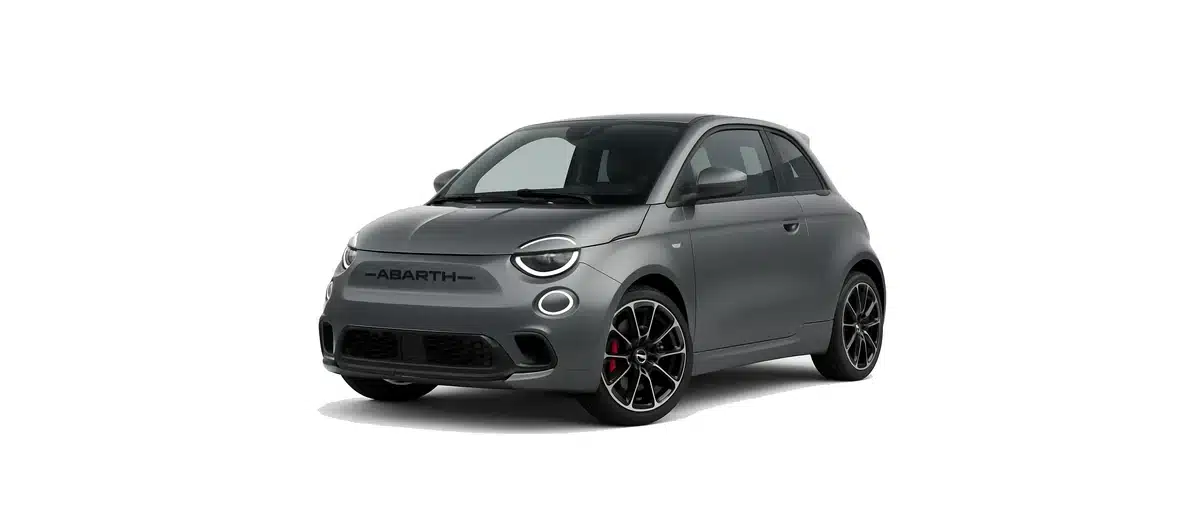
The Abarth 500e is a compact pure electric performance hatchback and cabriolet, bringing Abarth character to the Fiat 500e electric platform. For UK drivers, it is a relatively small-battery EV with brisk performance, a distinctive Abarth Sound Generator and charging hardware that suits a mix of home, workplace, destination and short rapid-charging stops.
This guide explains what you need to know about charging the Abarth 500e in the UK, including its Type 2 AC connection, CCS rapid charging, expected charging speeds, range considerations and how to choose the right cable for everyday use. Figures vary slightly by trim, wheels and body style, so range and charging times should be treated as realistic guidance rather than guaranteed results in every situation.
View Abarth 500e Charging Cables
Abarth 500e Battery and Charging Specifications
The Abarth 500e is a BEV, meaning it is a fully electric vehicle with no petrol engine, hybrid system or range-extender. UK models are listed with a 42 kWh-class lithium-ion battery. Independent data commonly lists around 37.3 kWh as usable capacity, while some UK listings round the battery figure to approximately 42.2 kWh.
For charging, the Abarth 500e uses the standard European electric car connector arrangement: a Type 2 socket for AC charging and CCS Combo 2 for DC rapid charging. The charging port is located on the right-rear side of the car. This means the car is compatible with the common UK charging setup used by most modern electric vehicles.
- Vehicle type: Pure electric / BEV
- Body styles: 3-door hatchback and cabrio/convertible
- Battery: 42 kWh-class pack, with around 37.3 kWh usable capacity commonly listed
- AC charging: Type 2, up to 11 kW where the supply supports it
- DC rapid charging: CCS Combo 2, up to around 85 kW
- Charging port location: Right-rear side
Battery Options
UK Abarth 500e models use a 42 kWh-class battery rather than offering a wide choice of battery sizes. This applies across the hatchback and cabriolet versions, including Standard and Turismo trims. The limited Scorpionissima launch edition is no longer generally available to order, but it shared the same broad electric 500e technical base.
The modest battery size is part of the car’s character. The Abarth 500e is intended as a small, agile electric hot hatch or convertible rather than a long-distance motorway cruiser. In practical ownership, this means charging little and often can work very well, particularly if you have access to home charging or regular destination charging.
AC Charging Speed
The Abarth 500e can accept up to 11 kW AC through its Type 2 connection. That 11 kW figure is useful at some workplace, commercial and public AC charge points, but it usually requires a three-phase electricity supply. Most UK homes have a single-phase supply, so the realistic maximum for many home wallboxes is 7.4 kW.
On a typical 7.4 kW home charger, a full charge from empty to 100% is likely to take roughly six hours, depending on conditions and the exact starting state of charge. On an 11 kW three-phase AC charger, the theoretical full-charge time is shorter, but not every property or public AC post will supply three-phase power.
For everyday UK use, the key cable is a Type 2 to Type 2 charging cable. This is used for untethered home wallboxes, many workplace chargers and most destination AC charge points. Some home chargers are tethered, meaning the cable is permanently attached, but a separate Type 2 cable is still useful for public AC charging.
DC Rapid Charging Speed
For rapid charging, the Abarth 500e uses CCS. Public rapid and ultra-rapid chargers have their own tethered CCS cables, so you do not need to carry a separate CCS cable. You simply use the connector attached to the rapid charger.
The Abarth 500e’s maximum DC charging rate is around 85 kW. Plugging into a 150 kW or 350 kW ultra-rapid charger will not make the car charge faster than the vehicle allows. However, using a higher-powered charger can still be convenient if it is available, reliable and fairly priced.
Typical rapid-charging time depends on the charger, battery temperature, starting percentage and charge curve. A 10-80% rapid charge is often discussed in the region of around 25 to 35 minutes, while Abarth and UK sources commonly quote charging to around 80% in about 35 minutes depending on the measurement used. In real-world driving, it is usually more efficient to stop for a short top-up than to wait for the battery to reach 100% on a rapid charger, because charging slows noticeably at higher states of charge.
Range and Efficiency
Abarth quotes up to 164 miles WLTP for the 500e, but that figure should not be treated as universal across every version. UK listings show variation by trim, wheel size and body style, with some Turismo versions listed lower, at around 157 miles. Cabrio models and larger-wheel trims may also be less efficient than the most favourable hatchback configuration.
Independent real-world range estimates are commonly closer to around 135 miles, with motorway driving, winter temperatures and spirited use reducing range further. This is not unusual for a compact electric performance car with a 42 kWh-class battery. The important point is to plan around your driving pattern rather than the best-case WLTP figure.
For urban and suburban journeys, the Abarth 500e’s battery size can be very practical. Short commutes, school runs, local errands and weekend trips can often be covered with home charging alone. For longer journeys, you may need one or more short rapid-charging stops, particularly if driving at motorway speeds.
Charging at Home
Home charging is usually the simplest and most cost-effective way to run an Abarth 500e in the UK. With a dedicated 7.4 kW wallbox, most owners can charge overnight and start the next day with the battery level they need. Because the Abarth 500e does not have a very large battery, even a part charge can add a useful amount of driving range.
If your home charger is untethered, you will need a Type 2 to Type 2 cable. A 32 amp single-phase cable is suitable for charging at up to 7.4 kW on a typical UK home wallbox. If you have access to three-phase AC charging and want to make use of the car’s 11 kW onboard charger, a three-phase Type 2 cable is the appropriate choice.
A 3-pin domestic charging lead may be useful in limited situations, but it is generally best suited as a backup or occasional charging solution, but can be used regularly if a qualified electrician has confirmed the socket and electrical installation are suitable for sustained EV charging. Domestic sockets were not originally designed for repeated high-load EV charging over many hours, so a properly installed wallbox is the better long-term option for most owners.
Public Charging
Public charging for the Abarth 500e falls into two main categories: AC destination charging and DC rapid charging. AC destination chargers are often found in car parks, hotels, supermarkets, gyms and workplaces. Many of these are untethered, so you will usually need your own Type 2 cable.
DC rapid chargers are used for quicker top-ups on longer journeys. These chargers have tethered CCS connectors, so you do not need your own rapid-charging cable. The car will manage the charging speed automatically, taking what it can from the charger up to its own limit and adjusting as the battery fills.
Because the Abarth 500e’s DC peak is about 85 kW, route planning should focus more on charger reliability, location and cost than on finding the highest advertised power output. A well-placed 100 kW charger may be just as useful as a much faster ultra-rapid unit for this car.
Vehicle-Specific Features
The Abarth 500e includes several features that shape the ownership experience. The Abarth Sound Generator is standard on UK models, giving the car a more distinctive character than many small EVs. UK specification material also lists a Mode 3 charging cable as standard equipment, although owners may still want to check the cable type, length and phase rating supplied with their vehicle.
One-pedal driving and e-coasting functions are also listed in UK equipment, helping drivers recover energy during deceleration and tailor the car’s behaviour in traffic. These features can improve convenience in town driving, although overall efficiency will still depend heavily on speed, weather, tyre choice, wheel size and driving style.
The Abarth 500e is not listed as supporting vehicle-to-load, vehicle-to-grid or vehicle-to-home functionality. Battery preconditioning for rapid charging is also not listed as supported in the available data, so rapid-charging performance may vary more with battery temperature and journey conditions.
Charging Tips
- Use Type 2 for everyday AC charging: This is the cable you need for most untethered home, workplace and destination chargers.
- Choose the right cable rating: A 32 amp single-phase Type 2 cable suits most 7.4 kW UK home chargers. A three-phase cable is needed if you want to use suitable 11 kW AC charge points.
- Do not chase ultra-rapid speeds: The car’s DC limit is around 85 kW, so charger location and reliability matter more than very high advertised power.
- Rapid charge in the efficient window: Plan longer journeys around shorter stops, often between roughly 10% and 80%, rather than waiting for 100% on DC.
- Expect range variation: Cold weather, high speeds, cabrio body style, larger wheels and enthusiastic driving can all reduce range.
- Check what came with the car: If your Abarth 500e includes a Mode 3 cable, confirm whether it is single-phase or three-phase and whether the length suits your usual charging locations.
Frequently Asked Questions
What charging cable does the Abarth 500e use?
The Abarth 500e uses a Type 2 cable for AC charging. For public rapid charging, it uses the CCS Combo 2 connector attached to the rapid charger.
Can the Abarth 500e charge at 11 kW at home?
Only if the home has a suitable three-phase supply and compatible charging equipment. Most UK homes are single-phase, so 7.4 kW is the more realistic home charging maximum for many owners.
How long does the Abarth 500e take to charge?
On a typical 7.4 kW home wallbox, a full charge is likely to take around six hours. On a suitable 11 kW AC charger it can be faster. On DC rapid charging, reaching around 80% typically takes roughly 25 to 35 minutes depending on conditions and the figure being measured.
What is the real-world range of the Abarth 500e?
The official WLTP figure is up to 164 miles, but not every trim is listed at that level. A practical real-world figure of around 135 miles is a sensible planning estimate, with less possible in cold weather or on faster motorway journeys.
Do I need a cable for rapid charging?
No. CCS rapid chargers have tethered cables. You only need to carry your own cable for AC charging, such as untethered home wallboxes and public destination chargers.
What This Means for Drivers
The Abarth 500e is best understood as a compact electric performance car that works particularly well when charged regularly at home or at convenient AC destinations. Its battery is large enough for everyday use, but small enough that charging times are manageable even on a standard 7.4 kW home wallbox.
For longer trips, the car’s CCS rapid-charging capability is useful, but its 85 kW maximum means you do not need to prioritise the fastest ultra-rapid chargers. Sensible route planning, short top-ups and realistic range expectations will make ownership much easier.
For cable selection, most UK owners should focus on a good-quality Type 2 cable that suits their charging setup. A single-phase cable is sufficient for typical 7.4 kW home charging, while a three-phase Type 2 cable is the better choice if you regularly use 11 kW AC posts.
Looking for a Charging Cable for Abarth 500e?
If you need a compatible Type 2 charging cable for home, workplace or destination charging, We offer Abarth 500e charging cables suitable for UK AC charging setups.
View Abarth 500e Charging Cables
Please note that this information is intended as a guide. Charging specifications may change due to model and year of manufacture. For precise information, always refer to your vehicle user manual.

